Category: Gaming

  • Moonlit Vigil makes its new cemetery caretaker investigate the people buried there

    Moonlit Vigil makes its new cemetery caretaker investigate the people buried there

    Chomski’s first-person game places stories about the living and the dead inside a linear exploration of cemetery grounds.

    A cemetery job provides the point of entry into Moonlit Vigil. The player arrives as its new caretaker and explores the grounds from a first-person perspective, gathering the stories of people who are alive and others who have died. Chomski’s official game description.

    Developer and publisher Chomski describes a linear narrative rather than an open-ended cemetery-management simulation. Observation and exploration carry the investigation. The premise makes burial the beginning of a mystery: the player is trying to establish what has happened in this particular place.

    The developer identifies death, suicide, and psychological distress among the game’s fictional themes. Its Steam listing currently gives a first-quarter 2027 release window.

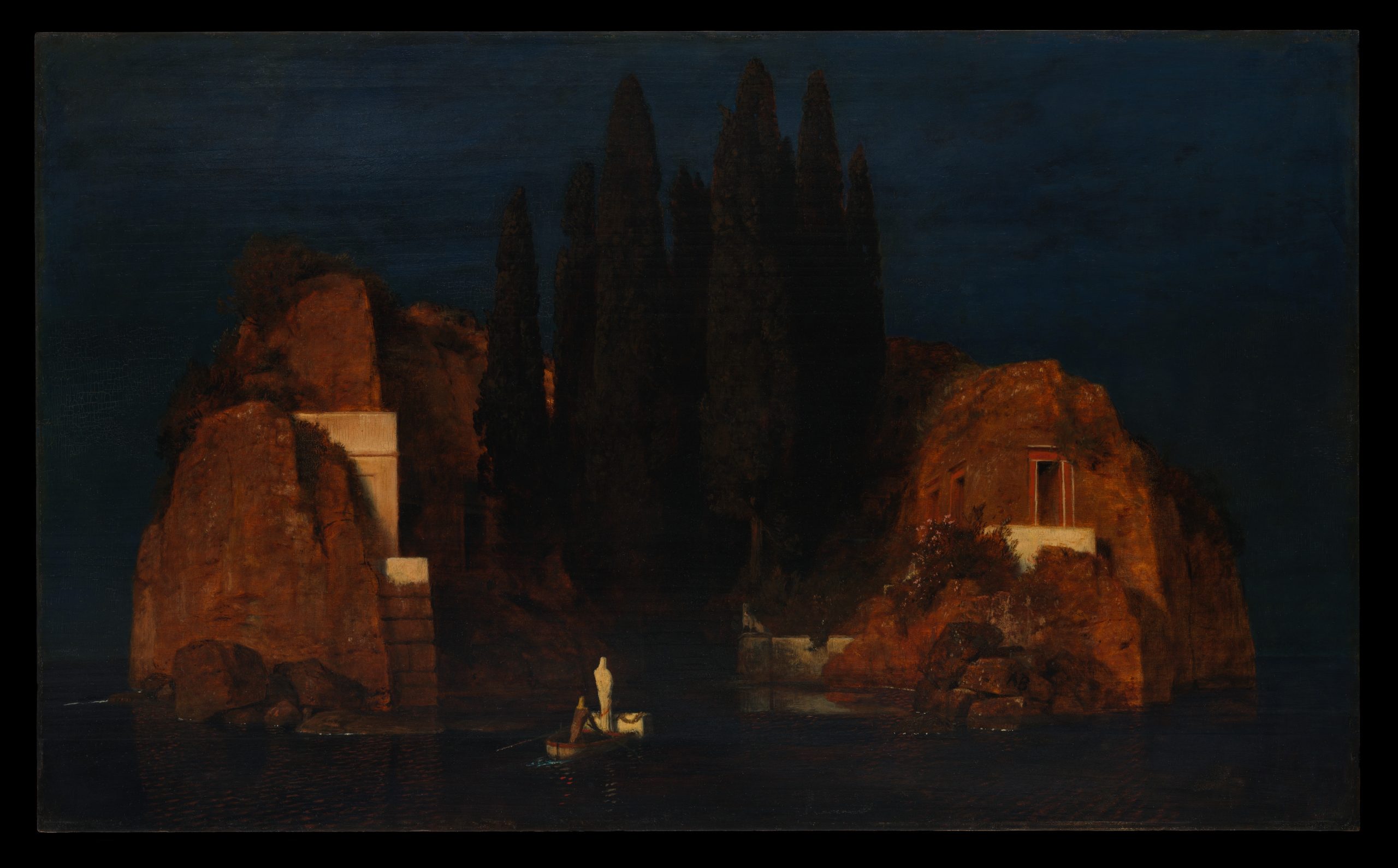
    A separate historical image of a place for the dead appears in Arnold Böcklin’s Island of the Dead. In the 1880 painting held by The Met, a small boat approaches a rocky island dominated by dark trees. A pale, shrouded figure stands beside a covered coffin. Marie Berna commissioned this version as a memorial to her husband; the museum records that the coffin and figure were additions she requested. The Met’s history of Island of the Dead.
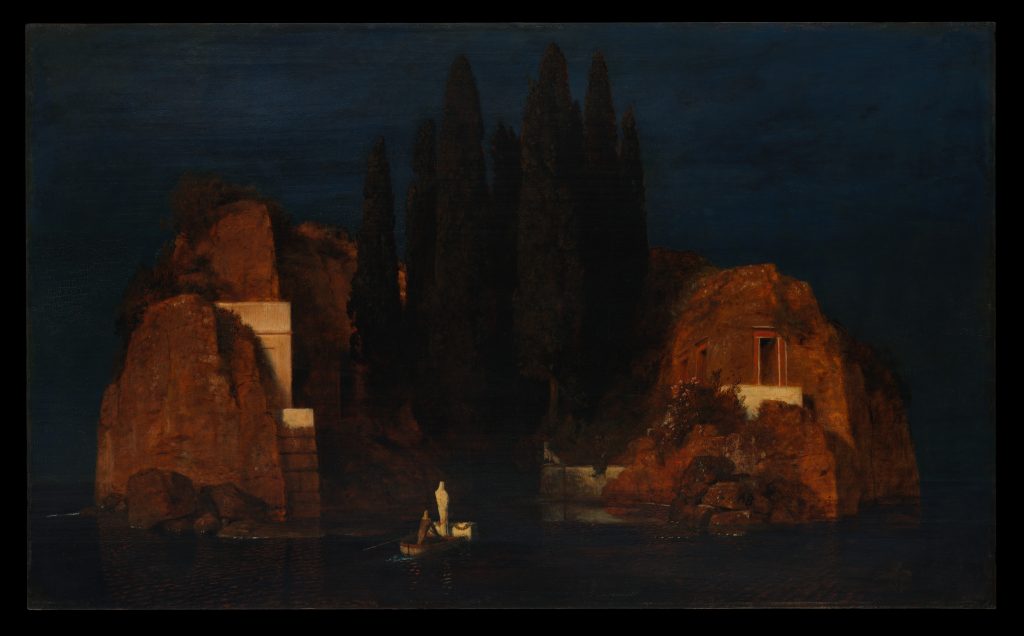
    A boat carrying a shrouded figure and covered coffin approaches a rocky island with dark trees and tomb openings.
    Arnold Böcklin, Island of the Dead, 1880, oil on wood. The Metropolitan Museum of Art, Reisinger Fund, 1926, object 26.90. Public domain. Historical illustration, not game artwork. Image source.

    Placed alongside the game’s cemetery premise, the painting provides a comparison in setting: both give death a location that someone approaches or enters. The painting is historical context selected here, with no claim that it influenced Chomski’s game. Chomski’s official game description. The Met’s history of Island of the Dead.
  • Playable Archive presents its recovered-footage story as one uninterrupted session

    The short horror game has no save system and gives its material a fictional evidence-file framing.

    Playable Archive has no save system. Its developer estimates thirty to sixty minutes for the experience and specifies that it is played in one sitting, making the archive a short, continuous encounter. DarkStone Digital’s official Playable Archive description.

    The premise begins with a New England couple finding an object during renovations. The game presents the resulting material as an archive passed on by an anonymous source. That evidence-file setup is part of the fiction, including its warnings about unexplained events.

    The object itself is described as missing from the material recovered alongside the footage. Players encounter rituals, communication with the dead, and multiple timelines through what remains. The absence gives the archive a gap: recorded experiences exist without the thing said to have started them.

    This framing puts the player in contact with an already assembled record. The no-save format establishes how that record is encountered, while the fictional source and missing object leave questions about how it was assembled and what lies outside the footage. DarkStone Digital’s official Playable Archive description.

  • Into the Dead’s shelters buy time while the survivors search for a way out

    Into the Dead’s shelters buy time while the survivors search for a way out

    The group must maintain its refuge while preparing to abandon it before the undead break through.

    A shelter in Into the Dead: Our Darkest Days is a temporary address. The group can improve it and reinforce its barriers, but the developer’s premise requires movement between refuges as the undead press further into the city. The official Into the Dead: Our Darkest Days description.

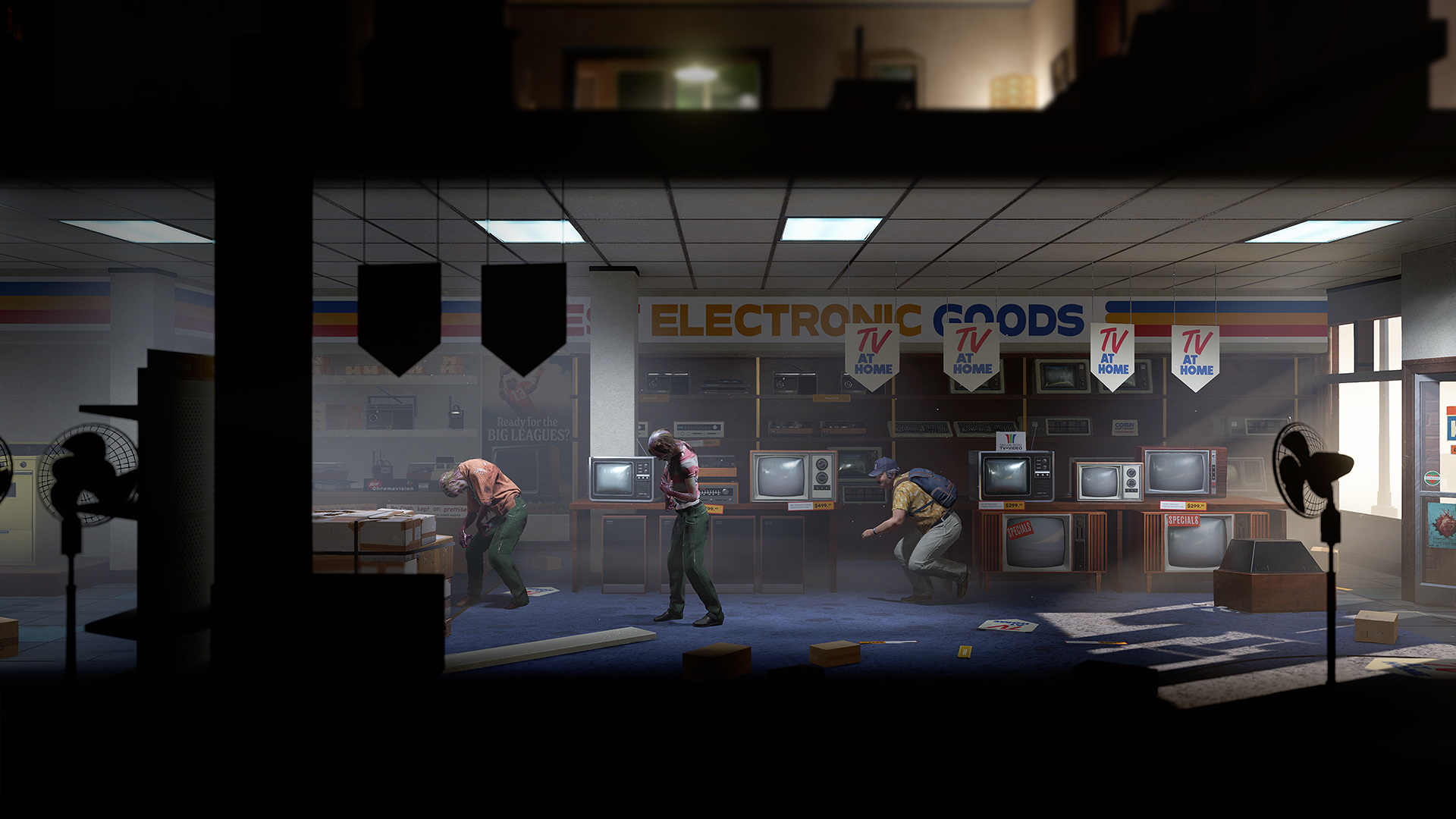
    A backpack-wearing survivor crouches behind two zombies among television displays in a store.
    A survivor moves through an electronics shop in Into the Dead: Our Darkest Days. Screenshot supplied by PikPok. Image source.

    The fictional Walton City lies on the Texas coast in 1980. A heatwave and an economic crisis precede the outbreak. With outside assistance cut off, the survivors’ larger objective is to leave the city rather than establish a permanent stronghold.

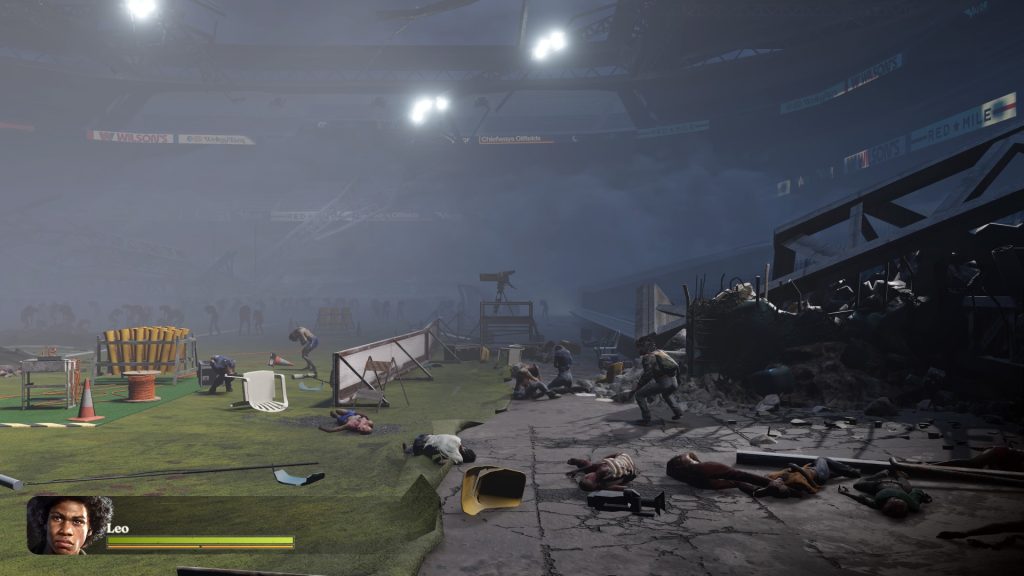
    A survivor stands beside broken stadium seating while zombies gather across a field littered with bodies and barriers.
    The game’s ruined stadium contains debris and undead inhabitants. Screenshot supplied by PikPok. Image source.

    That makes each scavenging trip part of two plans: sustaining the current group and preparing its next move. Supplies support food, tools, weapons, and shelter improvements. Hunger, exhaustion, injuries, and distress are tracked as conditions affecting the fictional survivors.

    Nightly attacks put pressure on the barricades. Beyond the shelter, encounters can involve other people as well as zombies, with decisions about recruitment, avoidance, and confrontation. The side-scrolling game joins those journeys to the continuing work of keeping a group together between departures. The official Into the Dead: Our Darkest Days description.

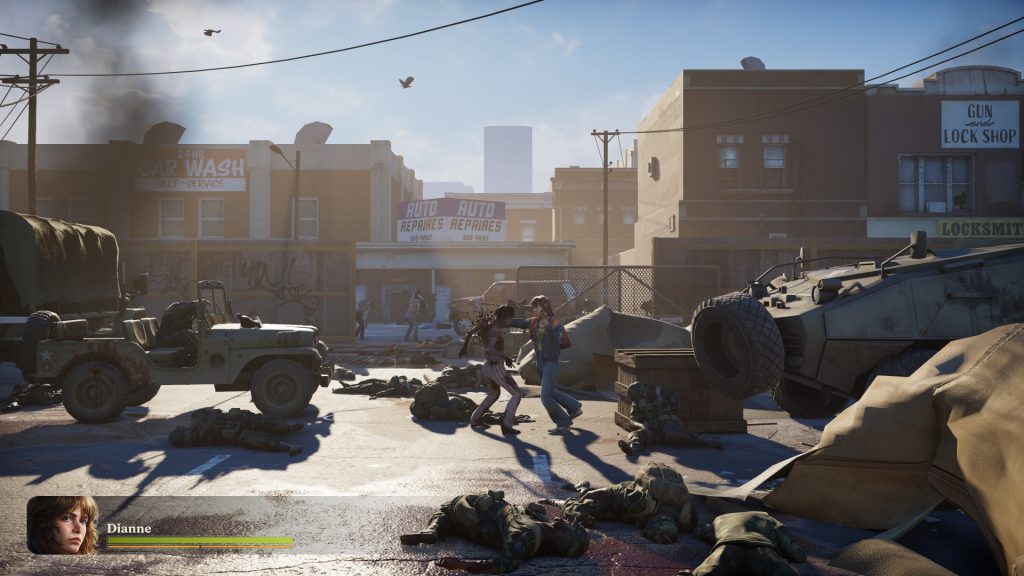
    A character labeled Dianne fights a zombie between abandoned military vehicles and storefronts.
    Dianne confronts a zombie in a street blocked by military vehicles. Screenshot supplied by PikPok. Image source.
  • CODE EXIT sends its operatives into sealed facilities to retrieve data and return alive

    The fictional city of Pantheon gives the team a mission beyond simply reaching the next doorway.

    Getting into a facility is only half a mission in CODE EXIT. Its Hermes operatives must explore, obtain data, and make it back to their base while a pursuer moves through the same darkened environment. CODE EXIT’s official mission and setting description.

    The game takes place in Pantheon, a fictional city whose integrated artificial intelligence, Minerva, controls its systems. Sealed routes, terminals, surveillance, and hostile machines turn the infrastructure into obstacles for the team.

    Up to four people can play together, with solo play also supported. Activating terminals and opening routes require decisions about where to send each operative. Dividing the group can advance separate objectives; remaining together concentrates its resources and attention.

    Scavenged tools help the team navigate the security network, while noise and limited visibility complicate movement. A mission can shift from exploration to an urgent escape if concealment fails. The objective continues to include the information the team came to collect: reaching safety and completing the assignment are connected parts of the same trip. CODE EXIT’s official mission and setting description.

  • Pathologic 3 lets its doctor revisit decisions within a town’s twelve-day crisis

    Patient examinations and town-wide decrees occupy different scales of the same fictional outbreak.

    Daniil Dankovsky can return to decisions he has already made in Pathologic 3. The game places a twelve-day limit around a town’s fictional outbreak, then gives its physician protagonist a way to revisit the sequence of events. Pathologic 3’s official description of time and decision systems.

    His work operates at two scales. In individual encounters, he examines patients and works out what their accounts reveal or conceal. At the town level, he can issue decrees that change how people move, receive resources, and encounter the authorities.

    The described options include quarantines, patrols, and curfews. These are consequential choices within the story’s simulation, whose effects may make residents hostile to the doctor. Their presence in the game does not establish that any particular choice will solve the crisis.

    The ability to go back makes those consequences part of a branching chronology. Dankovsky arrives researching death and seeking someone believed to be immortal, only to find that person dead. His investigation and the effort to change the town’s outcome then unfold together, with earlier choices remaining open to reconsideration. Pathologic 3’s official description of time and decision systems.

  • Red Nun’s Legacy uses memories, mirrors, and moths to open paths through its setting

    Red Nun’s Legacy uses memories, mirrors, and moths to open paths through its setting

    Susan’s search combines hiding from pursuers with abilities that change what she can discover.

    Finding a route in Remothered: Red Nun’s Legacy involves more than locating a key. The game’s described hypnosis abilities include recovering past memories, working with mirrors, and manipulating moths to expose passages or alter the environment. Stormind Games’ official story and mechanics description.

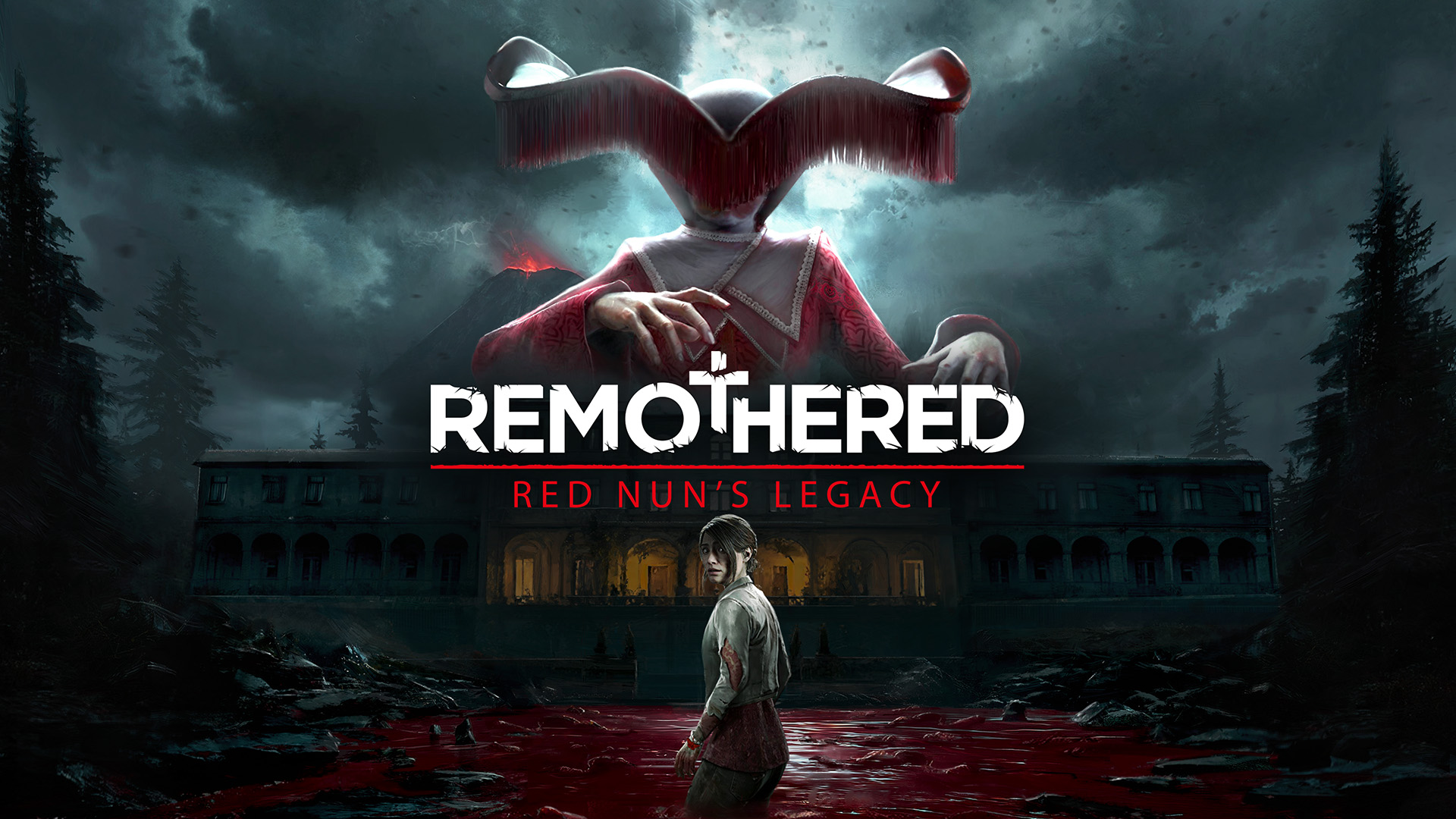
    Remothered: Red Nun’s Legacy artwork with a woman before a mansion and a large red-clad figure above.
    Promotional artwork for Remothered: Red Nun’s Legacy. Image supplied by Stormind Games. Image source.

    These mechanics accompany Susan’s search for her missing daughter. A recording gives her reason to believe the girl may still be alive and draws her to a former Ashmann family residence on Mount Etna’s slopes.

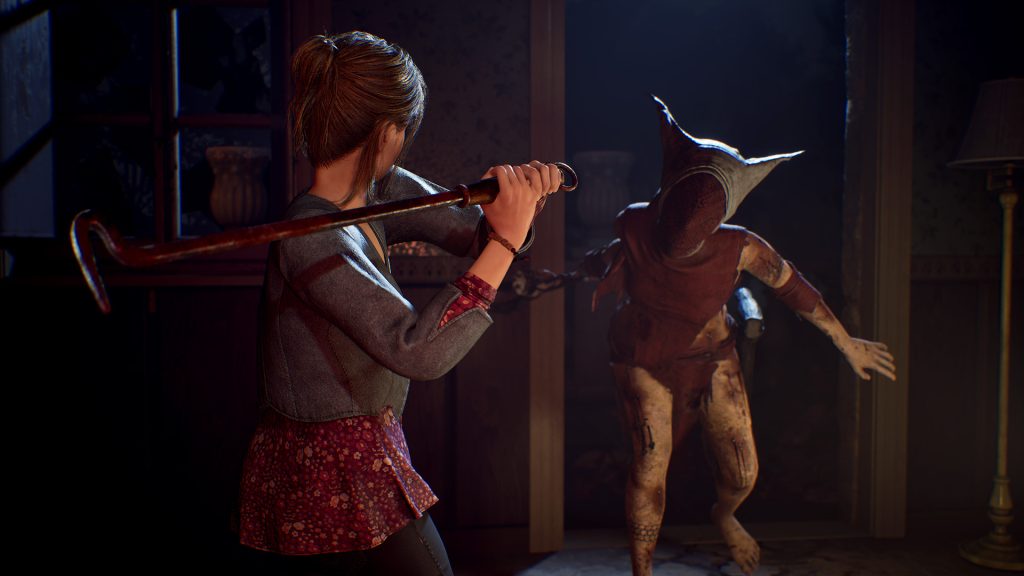
    A woman raises a metal bar as a masked figure approaches through a doorway.
    An encounter inside Remothered: Red Nun’s Legacy. Screenshot supplied by Stormind Games. Image source.

    The house contains clues, objects, and puzzles, as well as pursuing enemies. Susan can hide or evade them and fight back at critical moments. Exploration therefore involves both reading the setting and judging when she can move through it.

    A red-clad figure with a white head covering and broad red-fringed headdress in a firelit room.
    The Red Nun’s wide, fringed headdress obscures her eyes. Screenshot supplied by Stormind Games. Image source.

    Stormind Games connects the story to the Sicilian convent called Cristo Morente and the origins of the Red Nun. Cissy Jones voices Susan, while Maggie Robertson voices the Red Nun. The soundtrack is credited to Akira Yamaoka and Aram Shahbazians. The Steam edition lists an October 27, 2026 release. Stormind Games’ official story and mechanics description.

  • QUIET makes the players’ real voices part of the danger

    QUIET makes the players’ real voices part of the danger

    Alien ducks need to coordinate a repair mission while noise can reveal where they are.

    Talking to teammates has a consequence inside QUIET. The game requires a microphone because real-world sound forms part of its noise system, alongside movement and collisions in the environment. LINE Games’ official QUIET description.

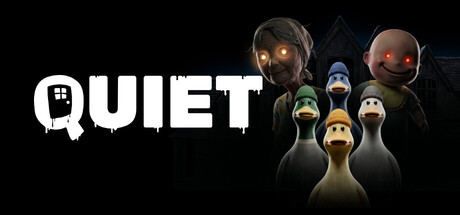
    Four cartoon ducks beneath two larger characters beside the QUIET logo.
    QUIET promotional key art supplied with LINE Games’ press release. © LINE Games Corporation. Image source.

    Its stranded travelers are alien ducks whose spacecraft has crashed on Earth. One to four players search for the components needed to repair it. Carrying objects and moving through unfamiliar places can create the very noise that attracts unwanted attention.

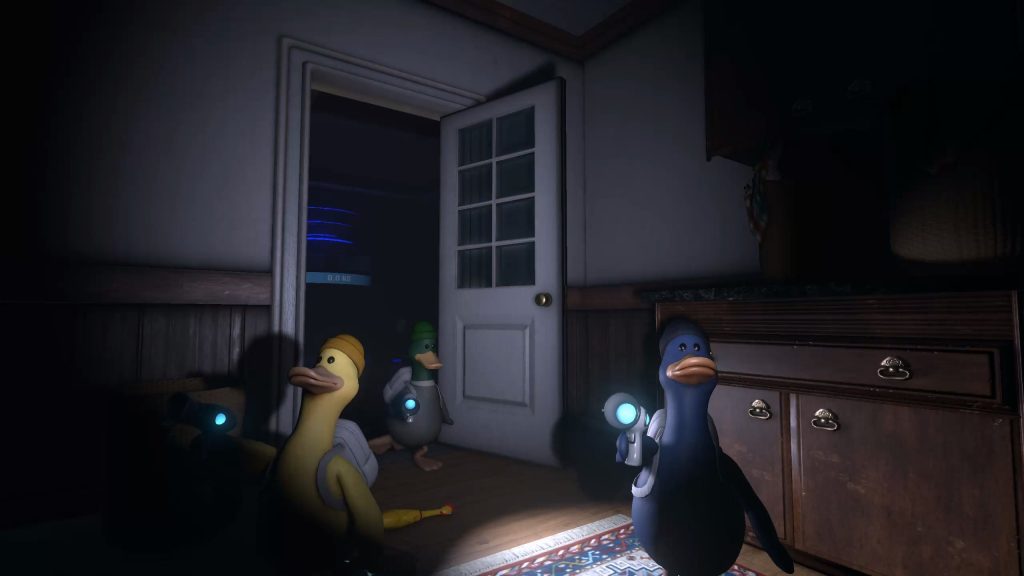
    Three cartoon ducks with illuminated equipment stand beside a dresser and an open door.
    QUIET’s duck characters explore a furnished interior. Screenshot supplied by LINE Games. Image source.

    Cooperation introduces a practical tension: the group needs to communicate, while speaking itself carries risk. The microphone links the room where someone is playing to the fictional space where the ducks are hiding. Silence becomes a shared task rather than simply a button that makes a character crouch.

    A control console has screens labeled Classic and Arcade, with duck artwork on the Arcade screen.
    A development-build screenshot shows QUIET’s Classic and Arcade selection screens. Image supplied by LINE Games. Image source.

    LINE Games also describes an arcade mode built around competition between the ducks. That separate mode changes the relationship between players, who can knock each other down and interfere with one another’s chances. The co-op premise, by contrast, puts the repair effort and the consequences of noise on the whole crew. LINE Games’ official QUIET description.

  • Look Outside turns an apartment into a refuge between trips through the building

    Food, equipment, allies, and a television deadline connect the home to the dangers beyond its door.

    The apartment in Look Outside is somewhere to return to. Francis Coulombe’s survival horror roleplaying game sends its protagonist through one apartment building in search of supplies, then brings those resources back into a domestic routine. Devolver Digital’s official description of Look Outside.

    At home, the character can cook, make tools, play games, and spend time with allies. These activities sit between journeys into corridors occupied by transformed neighbors and other unfamiliar figures. Food and equipment connect the two halves of the game: the expedition supplies the home, and the home supports the next expedition.

    A television broadcast supplies a deadline. It says the outside will become safe in fifteen days. Looking out before then has a different consequence in the game’s premise: the observer changes into something else.

    The building therefore contains a longer wait. Exploration can produce information as well as materials, and the publisher describes multiple possible endings. The immediate task is to remain alive within that enclosed setting while gradually discovering what has happened beyond it. Devolver Digital’s official description of Look Outside.

  • World of Horror builds its cosmic mysteries from artwork drawn in MS Paint

    Its one-bit presentation gives the investigations in Shiokawa a shared visual language.

    The hospitals, classrooms, apartments, and forests of World of Horror share an unusual production tool: MS Paint. The developer identifies that program as the source of all the game’s one-bit artwork. World of Horror’s official description and credits.

    The setting is Shiokawa, a Japanese town facing the return of the Old Gods. Its everyday places become sites of investigation, with strange events connecting local mysteries to a wider approaching catastrophe.

    The player chooses a character and works through cases assembled with randomized encounters. The current official description lists fourteen playable characters and a pool of twenty investigations, with multiple endings for most mysteries. Choices and turn-based combat determine how a particular attempt unfolds.

    Developer panstasz pairs the pixel artwork with a chiptune soundtrack. The publisher names Junji Ito and H. P. Lovecraft as influences on its horror imagery. Those references describe the creative lineage supplied by the developer; the game’s town, characters, and changing investigations provide its own framework for the images. World of Horror’s official description and credits.

  • God Save Birmingham makes the town’s furniture part of surviving its undead inhabitants

    Movable objects and the player’s own physical vulnerability operate within the same simulation.

    A table can change the route through a room in God Save Birmingham. Furniture can be moved against doors, while barrels can become moving obstacles for the undead. The objects around the survivor have a physical role beyond furnishing the town. Ocean Drive Studio’s official game description.

    Ocean Drive Studio sets its survival simulation in an imagined outbreak within medieval Birmingham. Its version of the market town includes the Bull Ring and Saint Martin’s Church, now surrounded by former inhabitants who have become a threat.

    The same physical system also makes the player vulnerable. A stumble can cost the character a weapon; a fall can cause an injury. Manipulating an object and navigating the space around it belong to the same set of decisions.

    Food and other daily needs remain part of surviving the outbreak. The official page describes a game still in development, with its public release date unconfirmed. Its stated approach places those needs inside a town whose ordinary contents can be rearranged, obstructed, or used during an encounter. Ocean Drive Studio’s official game description.