Category: Gaming

  • What Are the Best Horror Games to Play?

    The best horror game for you depends on what you want to do while you are frightened. Choose Resident Evil 4 for combat and resource decisions, Amnesia: The Dark Descent for vulnerable exploration, SOMA for science-fiction questions, or Phasmophobia for cooperative investigation. These are different entry points, not positions on a universal scare ranking.

    Before choosing, decide whether you want to fight, hide, investigate, or follow a story. A game can have an excellent premise and still ask you to perform an activity you dislike for hours.

    Which horror game should you choose first?

    What you want Starting point Main decision
    Combat with horror pressure Resident Evil 4, 2023 remake Do you enjoy aiming and managing equipment?
    Vulnerability and exploration Amnesia: The Dark Descent Does evasion sound more appealing than fighting?
    Science-fiction dread SOMA Do you want unsettling ideas as well as threatening spaces?
    A shared investigation Phasmophobia Does your group enjoy comparing evidence?

    These recommendations draw on the developers’ descriptions and the games’ stated features. They are not a hardware performance test or a promise about an individual player’s reaction.

    Resident Evil 4: when you want to act under pressure

    The 2023 remake of Resident Evil 4 follows Leon Kennedy into a rescue mission. Its combat emphasis makes it a useful option for players who want a direct response to danger. Check the edition carefully: the original game and the remake share a title but are separate releases.

    This is the route for someone who likes deciding how to use limited tools during a confrontation. It is less suitable if the very thing you want to avoid is repeated combat.

    Amnesia: when being vulnerable is the attraction

    Amnesia: The Dark Descent puts exploration, fragmented memory, and a threatening castle at the center of its premise. Its emphasis on vulnerability offers a different rhythm from a combat-led game.

    Choose this direction if searching an unfamiliar space sounds compelling. If being pursued prevents you from enjoying exploration, examine the available difficulty options before committing.

    SOMA: when the question stays with you

    SOMA uses an underwater science-fiction setting to explore identity and existence. It belongs on this shortlist for readers who want horror to generate questions beyond whether they will reach the next door.

    Frictional’s Safe Mode explanation describes an alternative to the standard threat experience. Check the mode on your chosen version; changing difficulty does not remove the story’s disturbing subject matter.

    Phasmophobia: when fear is a group activity

    In Phasmophobia, a team gathers evidence using fictional ghost-investigation equipment. The game’s paranormal systems are entertainment rules, not evidence for real ghost detection.

    Choose it for a group that likes talking through observations. A player seeking a tightly authored solo narrative is looking for a different kind of evening.

    What should you check before buying?

    Confirm the exact platform, system requirements, accessibility settings, content description, and whether your preferred mode needs other players. Multiplayer and cross-platform support are different claims; neither automatically implies the other.

    Watch a brief section of ordinary gameplay rather than only a trailer. Look for what the player repeats: searching drawers, solving puzzles, aiming, hiding, or discussing clues. That repeated activity is usually a more useful buying signal than a montage of the loudest moments.
  • What Are the Best Multiplayer Horror Games to Play With Friends?

    For cooperative investigation, start with Phasmophobia. For scavenging under pressure, consider Lethal Company. For competition between a killer and survivors, choose Dead by Daylight. The best multiplayer horror game is the one whose group size, communication demands, and style of failure suit the friends who will actually play.

    “Multiplayer horror” covers very different evenings. A team can be working toward one goal, competing against another player, or trying to recover after somebody makes an expensive mistake. Agree on that experience before everyone buys a copy.

    Phasmophobia: for groups that like solving a shared problem

    Phasmophobia supports online cooperative ghost investigations for up to four players. Its equipment and evidence system provide something concrete to discuss while exploring.

    The appeal here is coordination: who observed what, which clue is missing, and whether the team should continue. It suits friends who enjoy comparing information. A group that prefers constant combat may find the investigative premise less attractive.

    For a first session, leave time to learn the interface and agree on a simple way to report discoveries. One experienced player can explain the tools without narrating every surprise in advance.

    Lethal Company: for groups that enjoy a plan going wrong

    Zeekerss describes Lethal Company as cooperative horror built around scavenging abandoned moons and selling scrap. That shared task gives the group a practical reason to enter dangerous spaces.

    Choose it if your friends enjoy improvisation and can laugh at a failed expedition. Discuss whether you want to discover systems yourselves or have someone teach them. Those are both reasonable approaches, but mixing them without discussion can frustrate everyone.

    Check the current official player limit and supported platforms before planning a session. Modded lobbies are not the same as the standard game and can introduce compatibility or setup requirements.

    Dead by Daylight: for competitive pursuit

    The core Dead by Daylight format pits one killer against four survivors. Survivor cooperation exists inside a competitive match, so it differs from a group exploring against computer-controlled threats.

    This is a better fit when friends enjoy learning opponents’ behavior and improving across repeated matches. Before buying a particular edition, compare its included characters with the base game and separately sold content. A larger bundle is not automatically necessary for a first session.

    Decide whether the group wants a private match or public matchmaking. The setup, available roles, and number of friends needed can change with that choice.

    What should your group check before buying?

    Make one person responsible for confirming five details on the official store and support pages: platform compatibility, player limit, cross-play, online subscription requirements, and communication options. A game sold on two consoles does not necessarily allow those consoles to play together.

    Check whether captions, text chat, voice settings, and key remapping meet the group’s needs. Do not assume that a microphone or a specific listening setup works equally well for everyone.

    How do you make the first session enjoyable?

    Budget time for installation and learning rather than expecting a perfect first run. Agree on spoiler boundaries, whether recording is welcome, and how to take a break. Keep an easier backup activity available if troubleshooting consumes the evening.

    Most of all, choose the desired social experience. Shared investigation, cooperative disaster, and competitive pursuit can all be funny and frightening, but they reward different kinds of group attention.

  • What Are the Best Free Horror Games?

    Three useful free horror starting points are Doki Doki Literature Club! for a disturbing visual novel, Cry of Fear for a combat-oriented psychological horror game, and No More Room in Hell for cooperative zombie survival. Check the original releases linked here: similarly named sequels, expanded editions, and optional extras may have different prices.

    Free access does not mean mild content. These recommendations are for readers seeking horror; read the developers’ content descriptions before downloading, especially when selecting a game for someone else.

    Doki Doki Literature Club!: for readers who want a visual novel

    The original Doki Doki Literature Club! is free, with an optional paid fan pack. Its developer explicitly says it is unsuitable for children or people easily disturbed. The bright presentation should not be treated as an age recommendation.

    Choose it if you want a text-led experience and are interested in a game that challenges expectations about its own presentation. The story includes suicide and self-harm themes. Reviewing content information in advance is a reasonable choice, even if it reveals something about the direction of the story.

    The free original and Doki Doki Literature Club Plus! are different products. Search the complete title and verify the developer rather than assuming the first listing is the free edition.

    Cry of Fear: for players who want action and unease

    Team Psykskallar’s Cry of Fear is available as a free game and includes single-player and cooperative content. Its setting and violent imagery make it a different proposition from a short, gentle introduction to horror.

    Consider it if you want a more demanding game built around exploration and encounters. Check the mature-content description, including self-harm themes, and the technical requirements. An older release is not automatically compatible with every modern computer.

    Its psychological-horror framing belongs to a fictional narrative. It should not be used as a factual account of mental illness or as evidence that people experiencing mental-health difficulties are dangerous.

    No More Room in Hell: for cooperative survival

    The original No More Room in Hell offers free cooperative zombie survival. Its store description identifies support for up to eight players and emphasizes cooperation.

    This is the route for a group looking for a shared practical problem rather than a solo character study. Check server availability, current setup guidance, and the exact edition before gathering everyone. The sequel is a separate release; a free first game does not establish the price of the second.

    What does “free” actually include?

    A full free game, a free demo, a limited free weekend, and a subscription benefit are different offers. Read the purchase panel and description together. If continued access requires a subscription or a purchase after a trial, it is not the same arrangement as an independently free download.

    Optional soundtracks, donations, cosmetics, and expanded editions should be identified separately. They may support a creator, but they should not be quietly counted as part of the no-cost recommendation.

    Where should you download free horror games?

    Use the developer’s official page or an established storefront linked by the developer. Avoid treating a search result promising a free copy of a paid game as evidence of permission or legitimacy.

    Before installing, check the operating system, storage requirement, controller support, and content information. For multiplayer games, confirm that your friends can use the same version. The best free discovery is one you can actually run and want to spend time with, rather than a large download collected simply because it costs nothing.

  • What Order Should You Play the Resident Evil Games In?

    For a first trip through Resident Evil, follow the core series in introduction order rather than rearranging every scene into fictional chronology. A practical route is Resident Evil, Resident Evil 2, Resident Evil 3, Code: Veronica, Resident Evil 0, Resident Evil 4, Resident Evil 5, Resident Evil 6, Resident Evil 7: Biohazard, Village, and Requiem. Remakes can replace the corresponding originals for a modern first playthrough.

    That is a recommended reading of the series, not a requirement to finish every game before enjoying one. The more useful starting question is whether you want classic exploration, modern third-person combat, or first-person horror.

    What is a manageable first-play order?

    Stage Games Why this sequence helps
    Establish the foundations Resident Evil; 2; 3 Meet the original situation before later expansions
    Explore early-series connections Code: Veronica; 0 Add background after the initial introductions
    Follow the action-heavy middle 4; 5; 6 Continue through the numbered sequence
    Follow the later main entries 7: Biohazard; Village; Requiem Keep the later releases in order

    Capcom’s series history documents the older releases and remakes. Requiem extends that history as the ninth main entry, identified in Xbox’s official preview. This route focuses on the central sequence rather than every spin-off, multiplayer title, expansion, or mobile release.

    Should you start with Resident Evil 0?

    Not necessarily. A prequel’s position in fictional time does not make it the most useful introduction. Starting with the first game’s situation lets you encounter its mysteries before expanding the background.

    A chronological replay can be interesting once you already know the broad story. It is less useful if organizing the timeline becomes an obstacle to playing anything at all. You also do not need to stop one game halfway through to interleave overlapping events from another.

    Should you play the originals or the remakes?

    Choose one version of each story for your first route. The remake of the first Resident Evil and the later remakes of 2, 3, and 4 are separate productions from their originals. They are not simply identical games with sharper images.

    If your interest is genre history, playing originals and remakes in pairs makes the comparison itself worthwhile. If your interest is following the characters, completing every version first can turn a welcoming route into a large obligation.

    Check the exact product name, release year, and available platform. Storefront bundles can group different versions in ways that are confusing when several products share a number.

    Can you begin with Resident Evil 4 or Resident Evil 7?

    Yes, provided you accept that some references will have more context later. Pick 4 if its third-person rescue adventure appeals to you; pick 7 if a first-person horror entry sounds more inviting. Continue from 7 into Village to keep that sequence together.

    Starting with a game whose controls and premise interest you is better than abandoning the series because you believe there is a mandatory entrance examination.

    Where do Revelations and the other games fit?

    Treat the Revelations games and other side entries as branches to explore after the main route gives you a sense of which characters and play styles you enjoy. Consult Capcom’s lineup for official titles and platforms.

    For an expanded series project, maintain separate lists for original release order, fictional chronology, and remakes. Combining all three into one unlabeled list is what makes many play-order guides harder to use than the games themselves.

  • What Are the Best Psychological Horror Games?

    For psychological horror, consider SOMA if you want questions about identity, Silent Hill 2 if you want a character-centered journey into an unsettling town, and Amnesia: The Dark Descent if memory and vulnerability interest you. The best choice depends on the kind of uncertainty you enjoy and the gameplay you are willing to repeat.

    Psychological horror is not simply a label for a game with fewer monsters. It can disturb through incomplete information, unstable expectations, memory, guilt, or a conflict between what a character believes and what the player notices.

    SOMA: for existential questions

    Frictional Games describes SOMA as science-fiction horror beneath the Atlantic. Its questions about existence make it a useful starting point for players who want the implications of the story to matter as much as the immediate threat.

    The developer’s Safe Mode offers a different approach to monster encounters. It is worth investigating if repeated failure interrupts your interest in the narrative. An alternative mode changes play conditions; it does not turn the underlying story into light entertainment.

    Silent Hill 2: for a personal mystery

    Silent Hill 2 is available as a remake distinct from the original release. Konami identifies it as psychological horror; the story’s personal framing is the reason to consider it here rather than treating it as interchangeable with every other monster game.

    Choose the exact version before comparing platforms or features. A discussion of the original’s camera, controls, or presentation may not describe the remake you are about to buy.

    Approach spoiler-heavy analysis after playing if discovering the story matters to you. Content guidance serves a different purpose from plot explanation, and readers should not have to trade away useful warnings simply to preserve a surprise.

    Amnesia: The Dark Descent: for memory and vulnerability

    Amnesia: The Dark Descent begins with Daniel in a castle and an incomplete understanding of his past. The premise brings discovery and uncertainty into the same space.

    Consider it if piecing together a setting appeals to you and you want vulnerability to shape exploration. If you dislike chase pressure, do not assume that the word “psychological” means you can calmly read every document without interruption.

    How do you choose without spoiling the story?

    Compare the activities first: exploration, puzzles, combat, evasion, and reading. Then check perspective, subtitles, difficulty options, and the ability to pause or save. Those practical details can tell you more about whether a game suits you than a synopsis of its final revelation.

    Use a short sample of ordinary play with sound at a comfortable level. Marketing footage often compresses confrontations, making a slow game look relentless or a combat-heavy game look mostly atmospheric.

    Does psychological horror portray mental illness accurately?

    Not necessarily. A game’s metaphor, supernatural explanation, or unreliable perspective is a creative device, not a clinical account. Psychological horror does not establish that a real diagnosis causes violence, monstrous behavior, or supernatural experiences.

    The genre works best as a conversation about how stories make knowledge uncertain. Ask what information the game gives you, what it withholds, and how that changes your choices. You do not need to diagnose a character to engage with the narrative.

    Which should you play first?

    Choose SOMA for science-fiction ideas, Silent Hill 2 for a personal mystery, or Amnesia for exploration shaped by a missing past. Read the current store’s content description before buying. No title can promise the same emotional response for every player, and leaving an experience unfinished is always an available choice.

  • What Is Survival Horror, and How Does It Differ From Action Horror?

    Survival horror is a game style that makes staying alive a problem of limited resources, vulnerability, and uncertain exploration. Action horror gives combat and active confrontation a larger role. The two overlap: a game can provide powerful weapons and still make ammunition, positioning, or retreat important.

    The useful distinction is what the game repeatedly asks you to decide. “Can I afford this encounter?” points toward survival pressure. “How can I execute this encounter well?” points toward action. Many games ask both questions.

    What makes survival horror feel different?

    Survival pressure comes from consequences that extend beyond the immediate encounter. Spending a useful item now may leave you less prepared later. Exploring another room may reveal an essential resource or create a problem you cannot easily reverse.

    That pressure can arise through limited inventory, scarce supplies, fragile characters, restricted information, or an environment that is hard to navigate. These are common tools, not a mandatory checklist. A game does not need every one of them to create a survival-horror experience.

    Notice how a game treats retreat. If avoiding a fight is a meaningful success, the design is asking you to evaluate survival more broadly than defeating every enemy.

    Does survival horror require combat?

    No. Vulnerable exploration can create survival tension without a large arsenal. Frictional’s Amnesia: The Dark Descent is described by its developer as first-person survival horror, illustrating how the label reaches beyond weapon-centered play.

    The relevant question is whether the player must manage danger while progressing. Fighting, hiding, escaping, and choosing a route can all contribute. A first-person camera alone does not establish the genre; it only describes the viewpoint.

    What does action horror emphasize?

    Action horror places more weight on performing during confrontation: aiming, movement, timing, crowd control, or combining abilities. Fear can still matter, but the player’s immediate attention may be occupied by executing a response.

    The 2023 Resident Evil 4 remake is a useful example of overlapping categories. It combines a horror premise and resource decisions with a strong combat focus. Calling it action-oriented does not require denying its survival elements.

    Genre labels are descriptive shortcuts, not a competition over which players are experiencing “real” horror.

    How can you tell which style a game uses?

    Watch ordinary gameplay and look at what failure teaches. Does the player need better aim, a different route, fewer wasted items, or a new understanding of the environment? Then look at what success preserves. Resources carried into the next area can be as important as completing the present fight.

    Reviews and store tags can provide clues, but user-added tags are not formal classifications. The same title can reasonably appear under survival, action, psychological, and science-fiction horror because those labels describe different aspects.

    Which style should you choose?

    If you enjoy careful planning, searching spaces, and deciding whether to engage, look for survival systems. If you enjoy responsive combat and improving execution under pressure, look for action emphasis.

    Check difficulty and accessibility options separately. A slower game is not automatically easier, and a harder combat mode is not automatically scarier. The experience you want may involve tension without repeated failure, or demanding play with a horror atmosphere.

    The clearest way to describe a horror game is often to pair its genre with its main activity: resource-management horror, evasive exploration, or combat-led horror. That gives another player a practical expectation instead of asking one contested label to explain everything.

  • Poppy Playtime Chapter 5 continues the factory pursuit as a separate expansion

    Mob Entertainment’s fifth chapter requires the free base game on Steam.

    Poppy Playtime Chapter 5 is an expansion for the original game, rather than a standalone download that includes the full series. Mob Entertainment’s Steam listing specifies that the free base game must be installed and that the purchase contains the fifth chapter only. Primary source: official synopsis and credits.

    The chapter takes the player farther into the factory while Huggy Wuggy pursues them. Allies have abandoned the player, and the story moves toward the figure controlling the events at Playtime Co. Primary source: official synopsis and credits.

    Those circumstances combine an immediate chase with the continuing mystery of who controls the factory. The company’s description establishes the confrontation without disclosing how it ends. Primary source: official synopsis and credits.

    Mob Entertainment is credited as both developer and publisher. Steam lists the chapter as single-player downloadable content released on February 18, 2026. That release is the concrete fifth installment; speculation about a later chapter is separate from what this product contains. Primary source: official synopsis and credits.

  • GOG’s Dino Crisis release brings the original game to modern Windows systems

    The Capcom release includes controller support and cloud saves.

    GOG’s Dino Crisis release contains the original Capcom game with compatibility work for modern PCs. The store places it within its Preservation Program and lists support for Windows 10 and Windows 11. Primary source: official description and credits.

    The product is single-player and includes controller support and cloud saves. GOG also identifies it as DRM-free, meaning that playing does not require an activation check or an ongoing internet connection. Primary source: official description and credits.

    The game’s premise begins with a scientist reported dead in an accident during research into Third Energy. Information brought back from a secret military project creates a reason to investigate that earlier account. Primary source: official description and credits.

    That scientific mystery belongs to the existing game. The GOG edition’s documented purpose is to keep that game usable on current systems, with the original content retained rather than a new storyline replacing it. Primary source: official description and credits.

  • iHunt turns monster hunting into paid jobs accepted through an app

    The tabletop game puts supernatural threats inside a working life shaped by money, assignments, and improvised cooperation.

    The hunters in iHunt get assignments through an app. Its tabletop premise casts them as workers trying to cover their expenses, with vampires, werewolves, and demons offering a source of income. Monster hunting belongs to their livelihood. Machine Age’s official role-playing game description.

    That setup puts two kinds of pressure in the same story: the creature attached to an assignment and the financial reasons for accepting it. The publisher explicitly presents the game as a critical, humorous treatment of the gig economy within urban fantasy. Machine Age’s official role-playing game description.

    Players create hunters and monsters collaboratively. The rules modify Fate Core and use four Fate Dice alongside one ordinary six-sided die. Those particulars identify the tabletop format behind the name, rather than a phone game that actually distributes real assignments. Machine Age’s official role-playing game description.

    The official iHunt project site extends the fictional app’s presence through in-world advertising and short videos. Its promotional language belongs to the invented business and setting. Together, the game and those materials make the app part of the world’s storytelling, linking each monster encounter to the question of how its hunters get paid. The creators’ official iHunt project site.

  • REANIMAL keeps its brother and sister inside a shared camera view

    REANIMAL keeps its brother and sister inside a shared camera view

    The co-op horror adventure uses one directed perspective across an island journey by land and boat.

    REANIMAL’s two protagonists share a directed camera. Its co-op presentation places the brother and sister within the same view, connecting their movement through the island to a common visual frame. Tarsier Studios describes that camera as part of its approach to tension and confinement. Tarsier’s official story and co-op description.

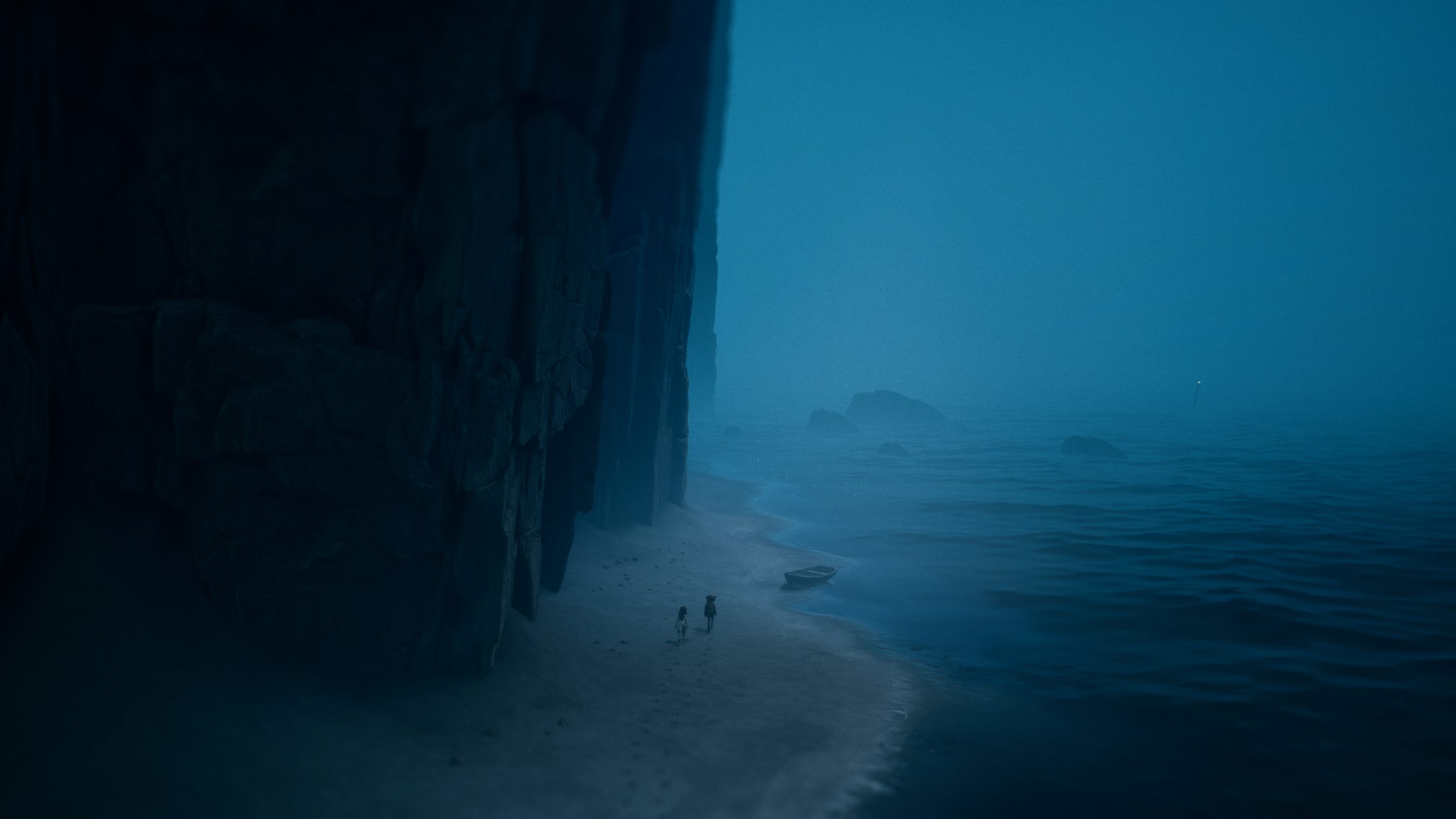
    Two small characters walk beside a tall cliff on a beach, with a boat near the water.
    REANIMAL. Official screenshot supplied by THQ Nordic for Tarsier Studios’ game. Image source.

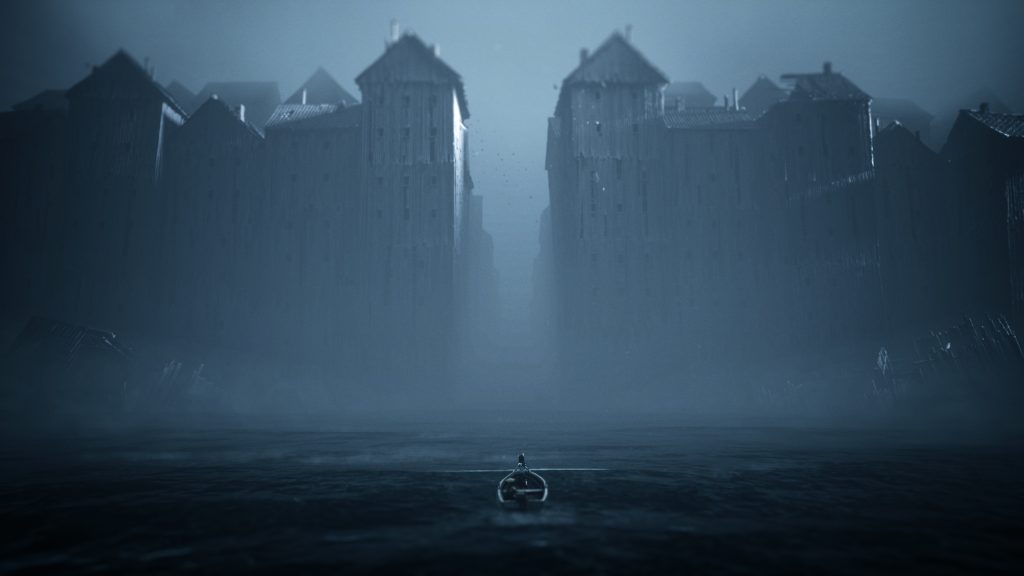
    Their task is to find missing friends and escape the island that was once their home. Travel takes place on land and by boat. The official screenshots make the scale visible: two small figures cross a beach beneath a cliff, while another view places a boat below towering buildings. Tarsier’s official story and co-op description. THQ Nordic’s release record and official media access.

    A small boat approaches tall waterside buildings through blue mist.
    REANIMAL. Official screenshot supplied by THQ Nordic for Tarsier Studios’ game. Image source.

    Those environments also carry pieces of the story. Tarsier describes a main route alongside other locations with narratives of their own, and connects the children’s pasts with both character design and the monsters pursuing them. Tarsier’s official story and co-op description.

    The game supports solo play as well as local and online co-op. THQ Nordic’s release record dates its arrival to February 13, 2026, on PC, PlayStation 5, Xbox Series X|S, and Nintendo Switch 2. Across those modes, the paired characters and the island rescue remain the premise. Tarsier’s official story and co-op description. THQ Nordic’s release record and official media access.

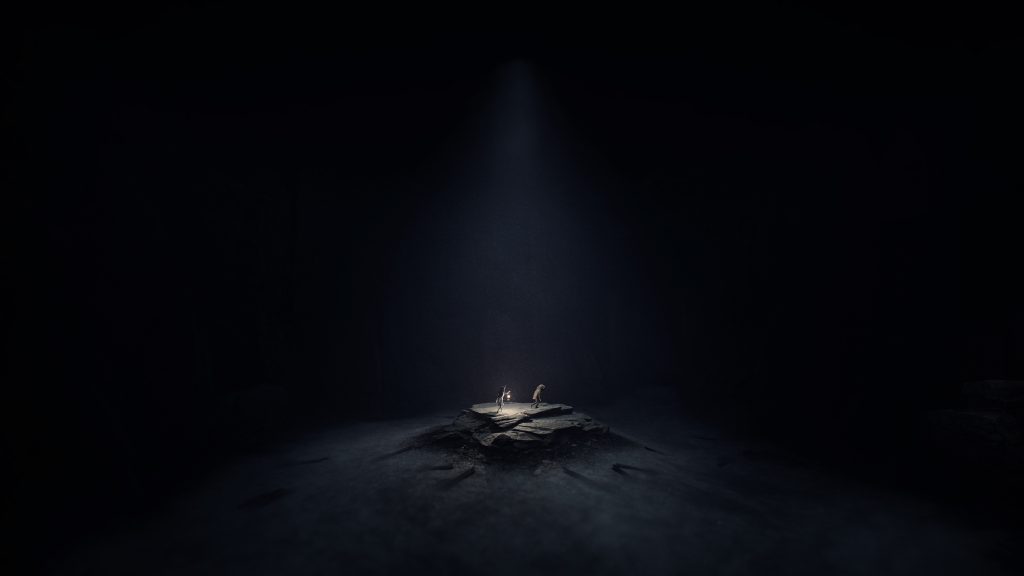
    Two characters stand on a rock ledge in darkness beneath a shaft of light.
    REANIMAL. Official screenshot supplied by THQ Nordic for Tarsier Studios’ game. Image source.