Category: Gaming

  • Hellbreak brings monsters from separate horror worlds into one card game

    Hellbreak brings monsters from separate horror worlds into one card game

    Its first set combines seven properties, putting film creatures into a shared system of head-to-head play.

    Hellbreak takes creatures that belong to different films and gives them a common place to meet: the tabletop. Spin Master’s trading card game, developed with Ghost Galaxy, brings monsters and locations from multiple rights holders into head-to-head battles. Hellbreak’s official Paramount partnership details.
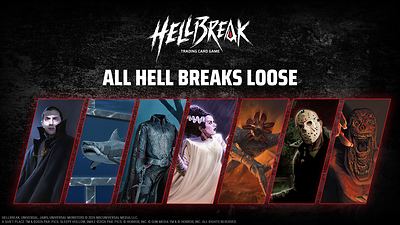
    Hellbreak promotional lineup showing Dracula, a shark, other film monsters, and Jason Voorhees.
    Hellbreak promotional artwork showing characters from its licensed film properties. Image supplied by Spin Master through its official media room. Image source.

    The initial set contains more than 200 cards drawn from seven properties. Its Paramount contingent includes the Death Angels from A Quiet Place, the Headless Horseman from Sleepy Hollow, and the entity from Smile. They share the set with properties licensed through Universal Pictures and Horror Inc.

    That shared game is distinct from a shared film universe. The crossover brings licensed characters into the same card collection and play system; it does not establish that their screen stories take place together.

    Spin Master identifies January 2027 as the first set’s retail launch, through game and hobby shops and Amazon. It also names AMC Global Media, Blumhouse, and Lionsgate among partners for future expansions. Those later partnerships are separate from the seven-property opening set: a studio’s involvement does not, by itself, identify every character that will receive a card. Hellbreak’s official Paramount partnership details.
    White Hellbreak Trading Card Game logo on a dark gray background.
    The Hellbreak trading card game logo. Image supplied by Spin Master. Image source.
  • Godzilla’s remastered arena fighter lets monsters turn buildings into weapons

    Godzilla’s remastered arena fighter lets monsters turn buildings into weapons

    Destructible surroundings are part of the combat system, alongside each kaiju’s attacks and energy blasts.

    A building in Godzilla: Destroy All Monsters Melee Remastered can become something a monster throws. The arena is a source of usable objects as well as the space where the fight happens, placing environmental destruction inside the combat system. Atari’s Xbox product listing.

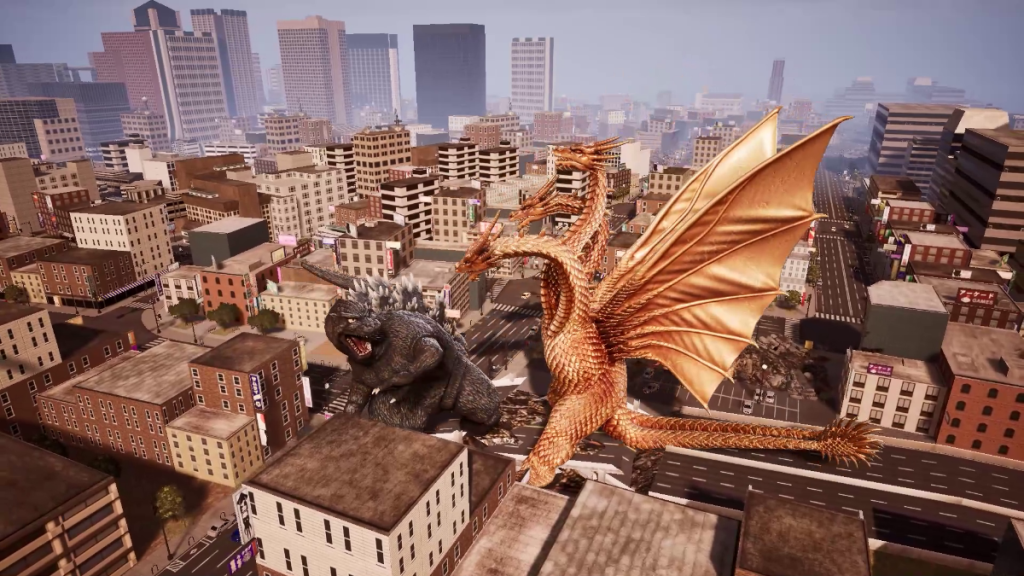
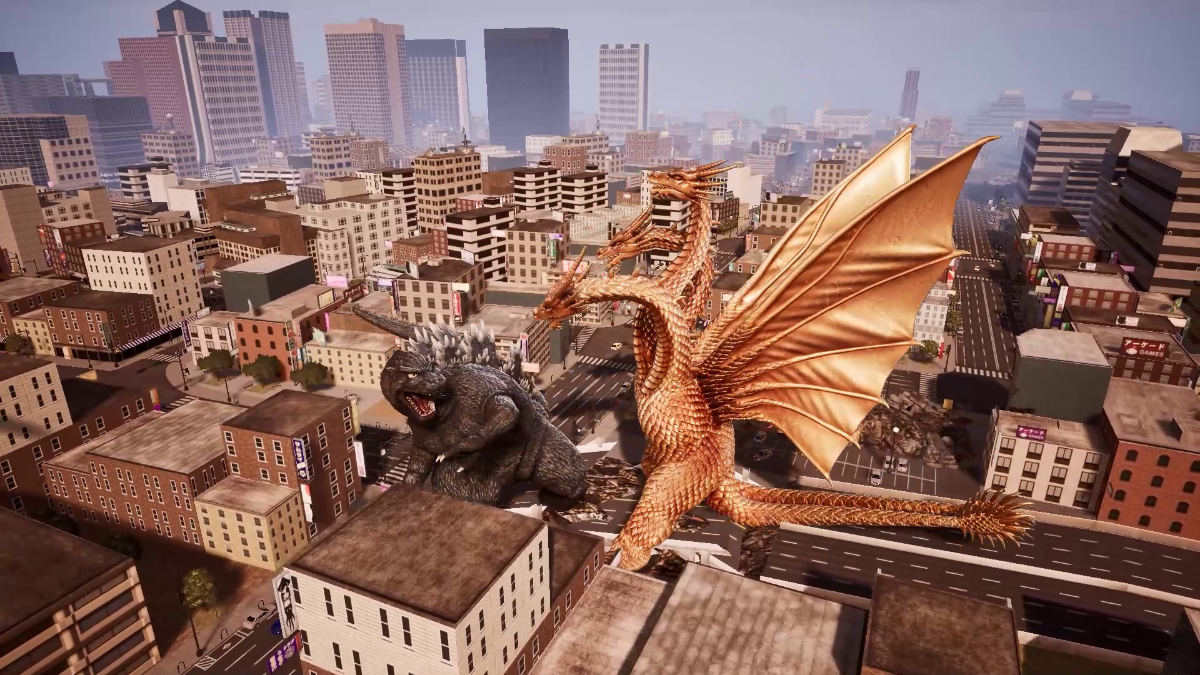
    Godzilla and the three-headed King Ghidorah standing among city blocks.
    Godzilla and King Ghidorah among city buildings in a publisher-supplied game image. TM & © TOHO. © 2026 Atari Interactive, Inc. Image source.

    Atari and Pipeworks’ updated version of the 2002 game includes 12 kaiju and eight locations. The settings range from recreated cities to Monster Island and an alien mothership, with day and night variations. Each monster has its own combination of close-range attacks, energy attacks, and Rage Mode moves.

    The player’s choices extend beyond which creature to control. A fight can involve approaching an opponent, using a ranged attack, or bringing nearby architecture into the exchange.

    Local multiplayer and online multiplayer support battles between players. Single-player content includes campaigns for the individual kaiju, while the revised unlock system allows players to choose the order in which they obtain monsters, locations, and gallery material.

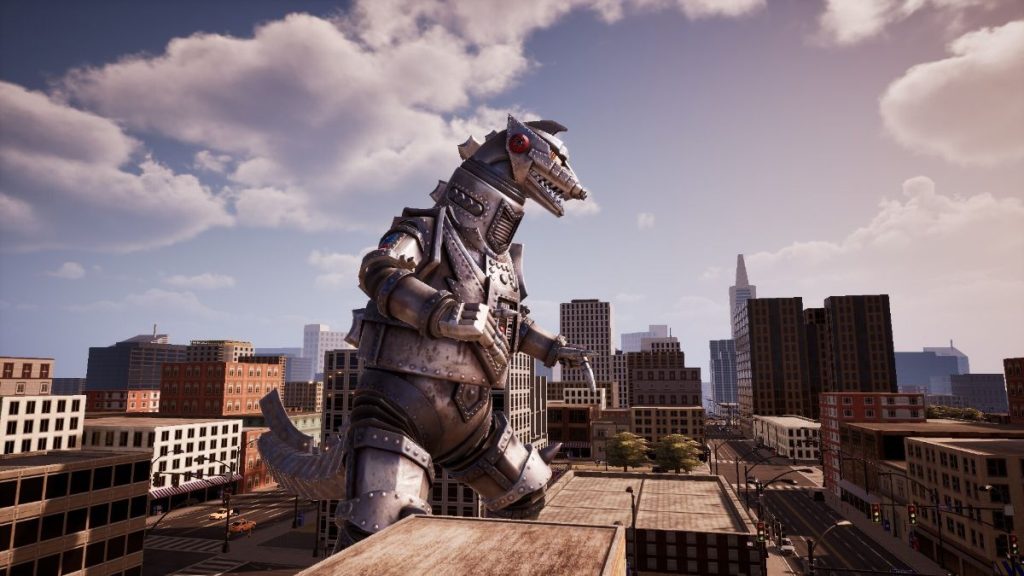
    The metal-bodied Mechagodzilla towering above a city.
    Mechagodzilla in Godzilla: Destroy All Monsters Melee Remastered. Publisher-supplied image. TM & © TOHO. © 2026 Atari Interactive, Inc. Image source.

    The Xbox Series X|S edition lists November 3, 2026 as its release date. Its version of a monster confrontation combines two or more enormous bodies, their individual abilities, and a city that does not remain scenery. Atari’s official game page.

  • Hellraiser’s planned tabletop games turn the puzzle box into several kinds of play

    Hellraiser’s planned tabletop games turn the puzzle box into several kinds of play

    The planned range spans an escape-room format, dice, social deduction, a board game, and a roleplaying game.

    Hellraiser’s Lament Configuration is a physical object that opens a route into another world. Salt Entertainment’s tabletop adaptation uses that premise in an escape-room-style game, one part of a larger licensed range rather than a single box. Salt Entertainment’s official project details.

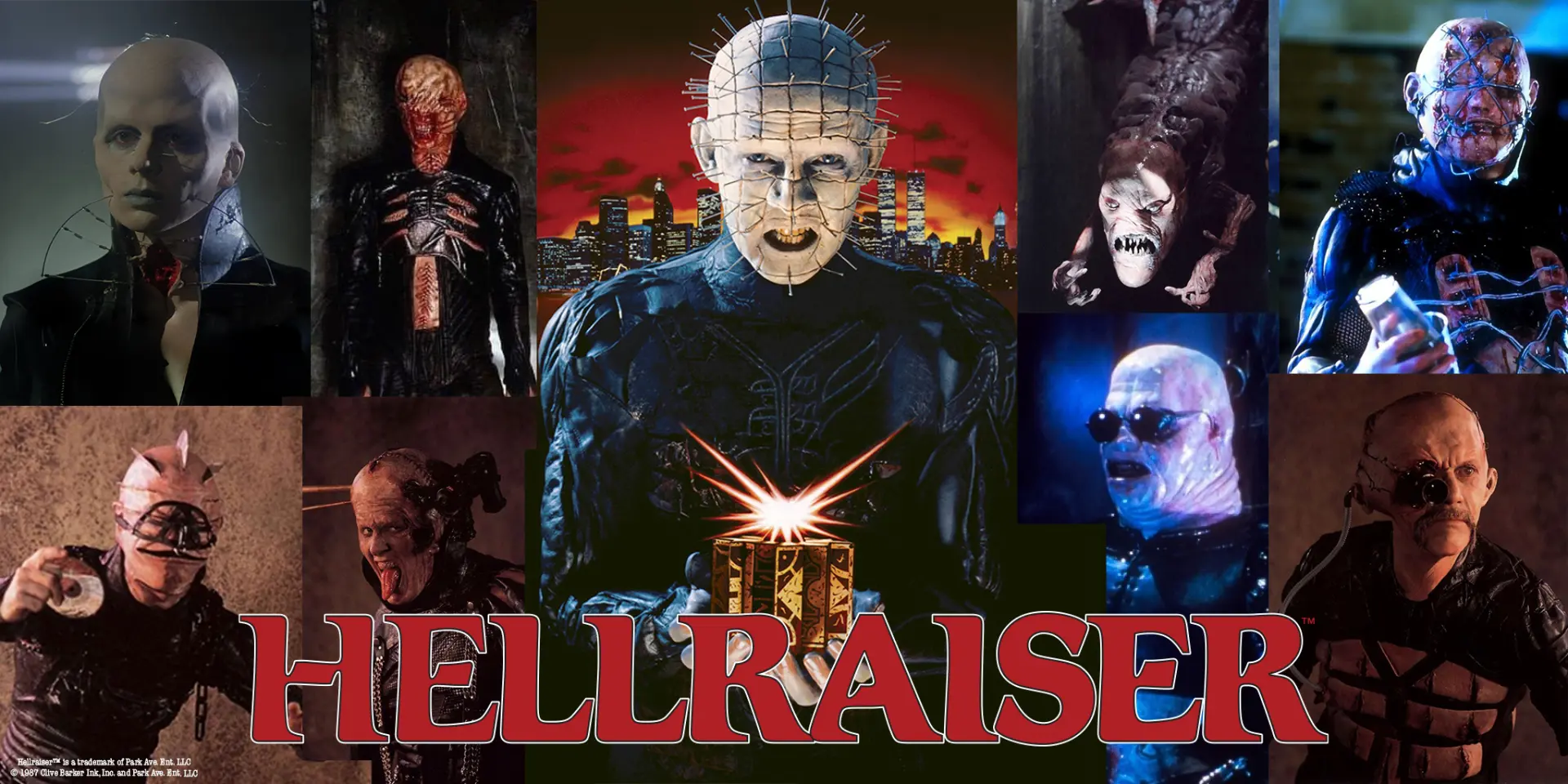
    A collage of Hellraiser characters around Pinhead and the puzzle box, above the Hellraiser title.
    Hellraiser franchise artwork supplied with Salt Entertainment’s tabletop press release. © 1987 Clive Barker Ink, Inc. and Park Ave. Ent. LLC. This image depicts film characters; final game artwork is still to be revealed. Image source.

    The other initial retail concepts take different forms. A dice game centers on risk and temptation, while a social deduction game uses concealed desires and changing loyalties. Those formats give the property separate sets of player decisions: solving, taking chances, and assessing what other people are hiding.

    Two additional projects have named designers. Michael Shinall is attached to a Hellraiser board game. Francesco Nepitello is designing a tabletop roleplaying game, which will provide a framework for players to create stories within the property’s world.

    Salt’s agreement is with Clive Barker and Park Ave Ent. LLC, with Surge Licensing acting as broker. The first releases are planned to begin around Halloween 2027, the original film’s fortieth-anniversary year.

    These are descriptions of the planned formats. Salt has not supplied final titles, full rules, or individual release dates in the project notice. The announced range establishes several approaches to the material without yet showing exactly how each will play. Salt Entertainment’s official project details.

  • In Ten Candles, the remaining light measures how much story is left

    In Ten Candles, the remaining light measures how much story is left

    The tabletop game makes a shrinking circle of candlelight part of its rules and its predetermined ending.

    The characters in Ten Candles do not have an escape route written into the game’s ending. Cavalry Games describes a form of tragic horror in which all the characters die during the final scene. The players begin knowing that destination. Cavalry Games’ official explanation of Ten Candles.

    Ten tea lights provide both illumination and a countdown. As the session progresses toward its last candle, the remaining light marks the approach of the ending. The physical setup makes time visible at the table rather than leaving it entirely to a narrated deadline.

    The story concerns what the characters do before that ending. Its people, setting, and monsters can change between sessions, with a gamemaster selecting a scenario for the group. A predetermined outcome does not determine every event that leads there.

    Cavalry Games describes the format as a single session lasting roughly two to four hours, with one gamemaster and three to five players. It is built around collaborative storytelling rather than an ongoing campaign.

    The candles are consequently more than decoration. They belong to the game’s structure: a limited source of light surrounding people who, within the fiction, have a limited amount of time.

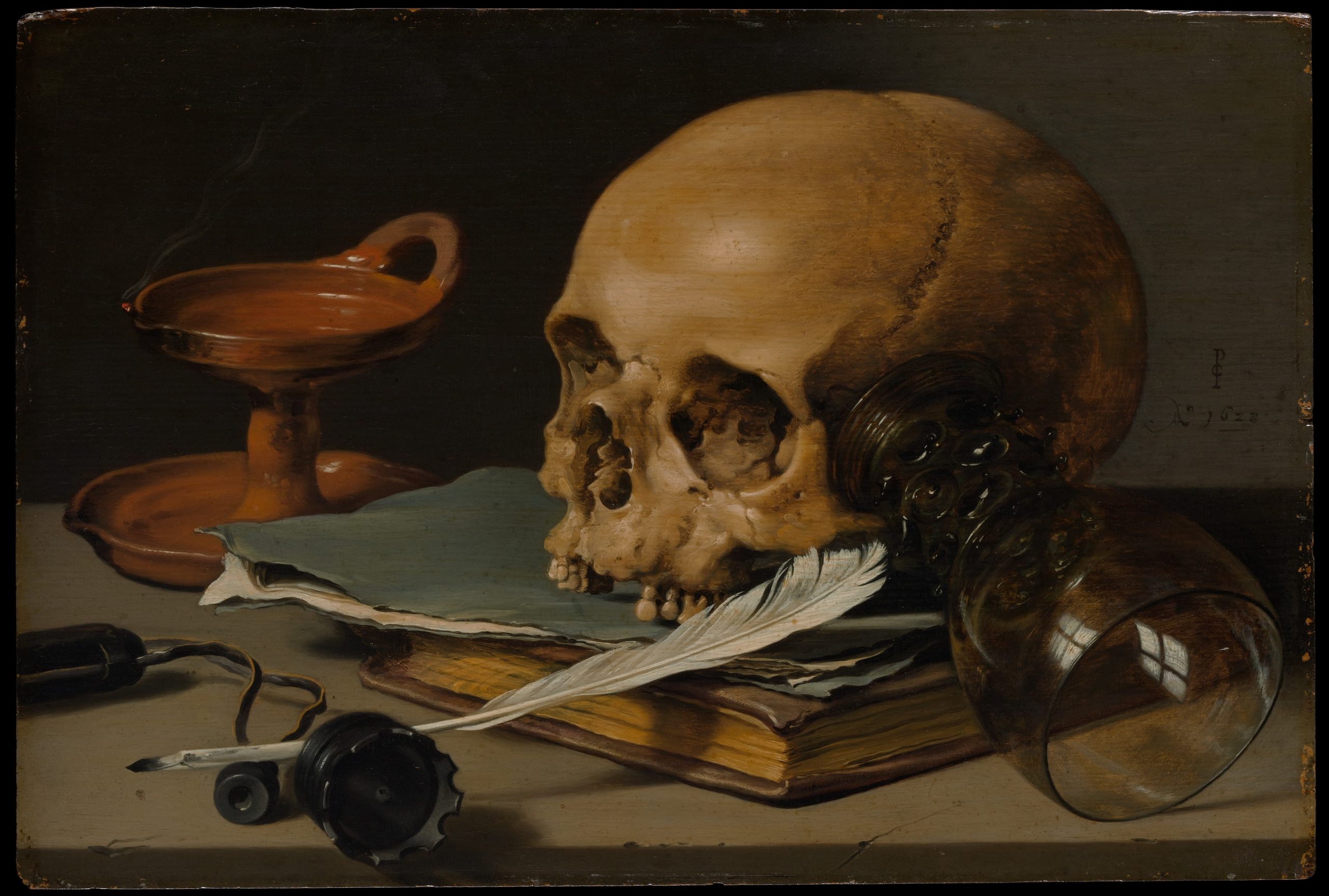
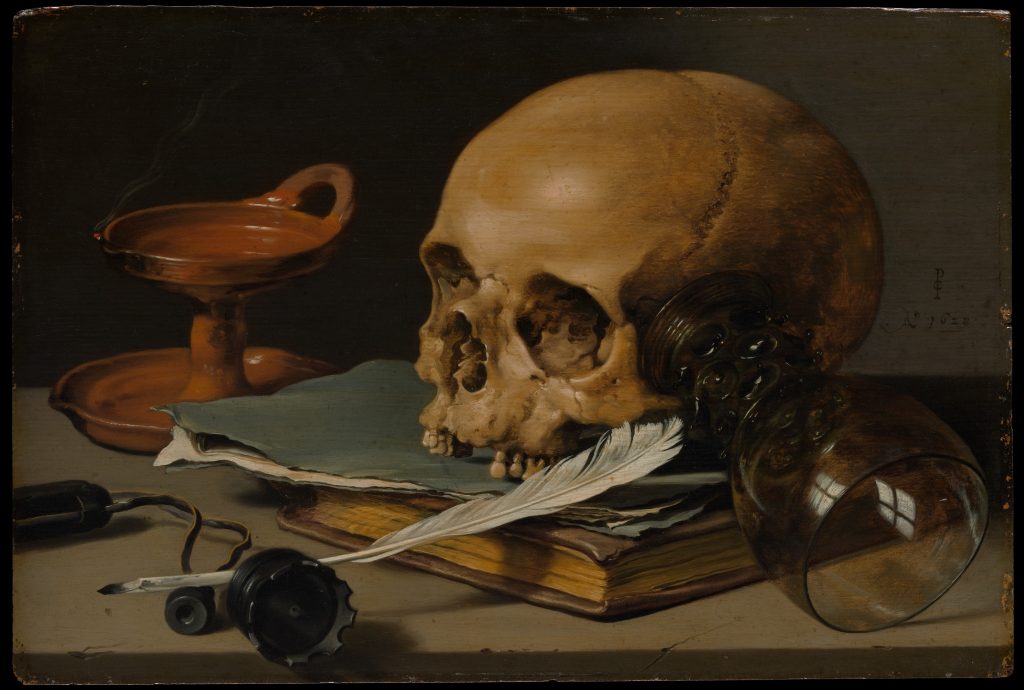
    A much older image gives that diminishing light a historical counterpart. In Pieter Claesz’s Still Life with a Skull and a Writing Quill, painted in 1628, an oil lamp’s wick fades beside a skull and an overturned glass. The Metropolitan Museum of Art identifies these objects as reminders that life is brief. The painting makes mortality visible through objects; Ten Candles makes the loss of light an event shared by the people at the table. The Metropolitan Museum of Art’s collection record.

    A skull, overturned drinking glass, quill, books, and a smoking oil lamp in a brown and gray still life.
    Pieter Claesz, Still Life with a Skull and a Writing Quill, 1628, oil on wood. The Metropolitan Museum of Art, Rogers Fund, 1949. Public domain. Historical artwork illustrating mortality and fading light. Image source.
  • Spooky Tales uses an undead host to connect four separate horror stories

    The anthology moves between ocean hunting, an occult club, a television shoot, and a pizza party.

    The recurring figure in Spooky Tales is its host. An undead presenter guides the anthology, while each of its four episodes changes the people, setting, and kind of danger on screen. The developer’s official Spooky Tales description.

    Two stories begin with an encounter that disrupts an established activity. Rineko places a new student in an occult club; Pepperoni Johnson turns a teenage pizza gathering into a home invasion. Their shared starting point is a group whose ordinary arrangement becomes unsafe.

    The other pair send characters looking for something. The Abyss-Borne takes a harpoon-equipped hunter to a coastal village and its surrounding waters. Golly Soda Pop follows a television ghost-hunting crew into a disused drinks factory, where the pursuit of footage becomes an encounter with a threat.

    The developer describes a narrative anthology with interactive mini-games and graphics recalling the original PlayStation era. That common presentation lets the collection change horror traditions between episodes: maritime pulp, Japanese body horror, found footage, and a domestic slasher scenario share a host without sharing one plot. The developer’s official Spooky Tales description.

  • Deathwish gives its human monster hunters an old bar as a base for investigation

    The safe house connects equipment, companions, and the information gathered before a confrontation.

    The fight in Hunter: The Reckoning – Deathwish starts before the monster appears. An old New York bar serves as a safe house where the player organizes equipment, gathers resources, and prepares for investigations. Nacon and Teyon’s official game description.

    The protagonist is human. Character creation includes appearance, merits, and flaws, but the setting’s vampires and werewolves possess physical advantages the hunter does not. Information about a particular target therefore forms part of the preparation, alongside weapons and tools.

    That work can involve infiltration, surveillance, or hacking. The publisher also describes consequences beyond the immediate hunt: conspicuous actions may bring police attention or draw other organizations into the situation.

    The bar changes as the story proceeds and other hunters join the protagonist. Companions have their own histories and motives, and relationships formed between missions affect whom the player takes into danger. The base is consequently both a storage space and a meeting place.

    Teyon develops the action roleplaying game for publisher Nacon, within the World of Darkness setting. Its project page lists a planned summer 2027 release. Teyon’s project page.

  • ANOMALITH sends Reona back into altered places to find her missing friend

    ANOMALITH sends Reona back into altered places to find her missing friend

    A shopping trip separates two friends and turns one survivor into a government-backed Diver.

    Reona Minazuki is searching for one person inside a much larger mystery. In ANOMALITH, the seventeen-year-old and her friend Arisa Kato are separated when the shopping mall they are visiting becomes an Anomaly Zone. ANOMALITH’s official story and character descriptions.

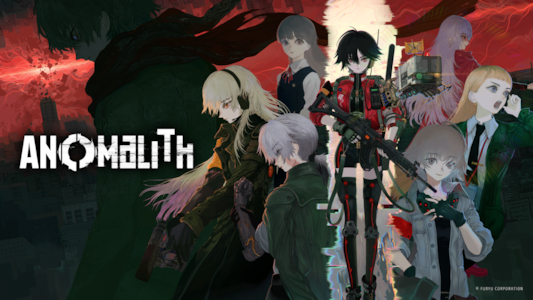
    Illustrated ANOMALITH characters, including a central character holding a weapon, against a red and dark city backdrop.
    ANOMALITH key art supplied with FURYU’s press release. © FURYU CORPORATION. Image source.

    Reona survives. Arisa’s location remains unknown. To look for her, Reona becomes a Diver with the Anomaly Zone Countermeasures Office, an organization backed by the government. Her return to these spaces is voluntary, driven by the disappearance rather than an assignment alone.

    The office supplies a wider framework around that personal search. Operator Yuiga Koda supports the dives, while research chief Imari Fushimi develops equipment from anomalous objects. Its founder, Kyoka Sudo, has her own experience of escaping a zone.

    The official premise connects three unresolved matters: where Arisa went, why these zones exist, and the power that awakens in Reona during a dive. A missing friend gives the journey a specific destination even while the environments—and the means of surviving them—remain unfamiliar. ANOMALITH’s official story and character descriptions.