Alien ducks need to coordinate a repair mission while noise can reveal where they are.
Talking to teammates has a consequence inside QUIET. The game requires a microphone because real-world sound forms part of its noise system, alongside movement and collisions in the environment. LINE Games’ official QUIET description.

Its stranded travelers are alien ducks whose spacecraft has crashed on Earth. One to four players search for the components needed to repair it. Carrying objects and moving through unfamiliar places can create the very noise that attracts unwanted attention.
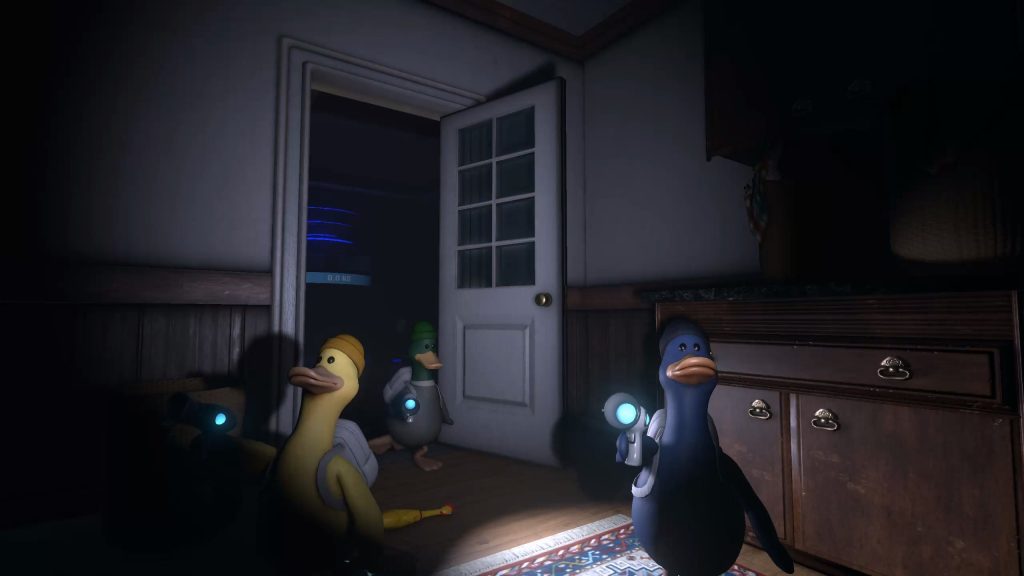
Cooperation introduces a practical tension: the group needs to communicate, while speaking itself carries risk. The microphone links the room where someone is playing to the fictional space where the ducks are hiding. Silence becomes a shared task rather than simply a button that makes a character crouch.
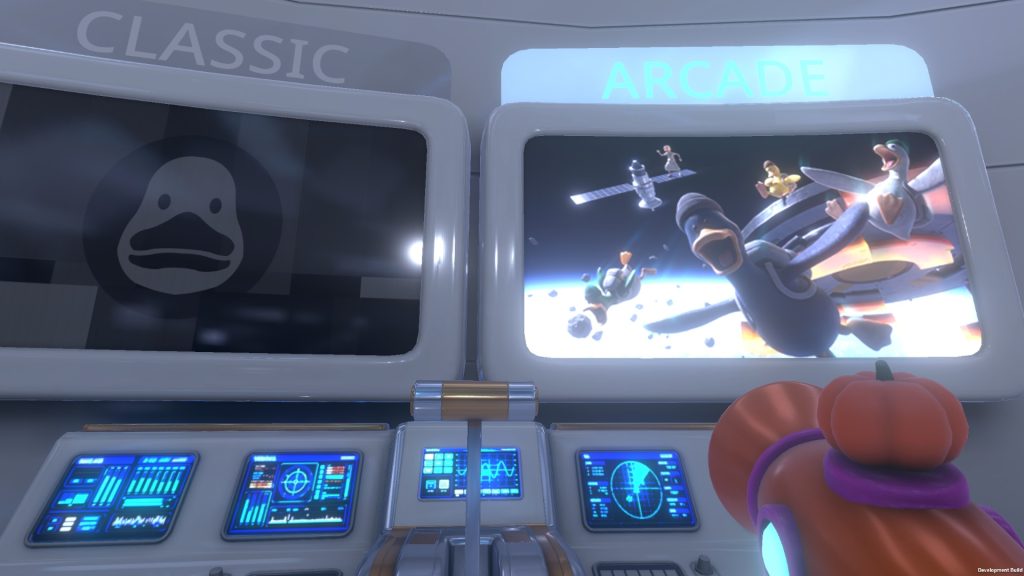
LINE Games also describes an arcade mode built around competition between the ducks. That separate mode changes the relationship between players, who can knock each other down and interfere with one another’s chances. The co-op premise, by contrast, puts the repair effort and the consequences of noise on the whole crew. LINE Games’ official QUIET description.