Author: Sericant Dark Team

  • Red Nun’s Legacy uses memories, mirrors, and moths to open paths through its setting

    Red Nun’s Legacy uses memories, mirrors, and moths to open paths through its setting

    Susan’s search combines hiding from pursuers with abilities that change what she can discover.

    Finding a route in Remothered: Red Nun’s Legacy involves more than locating a key. The game’s described hypnosis abilities include recovering past memories, working with mirrors, and manipulating moths to expose passages or alter the environment. Stormind Games’ official story and mechanics description.
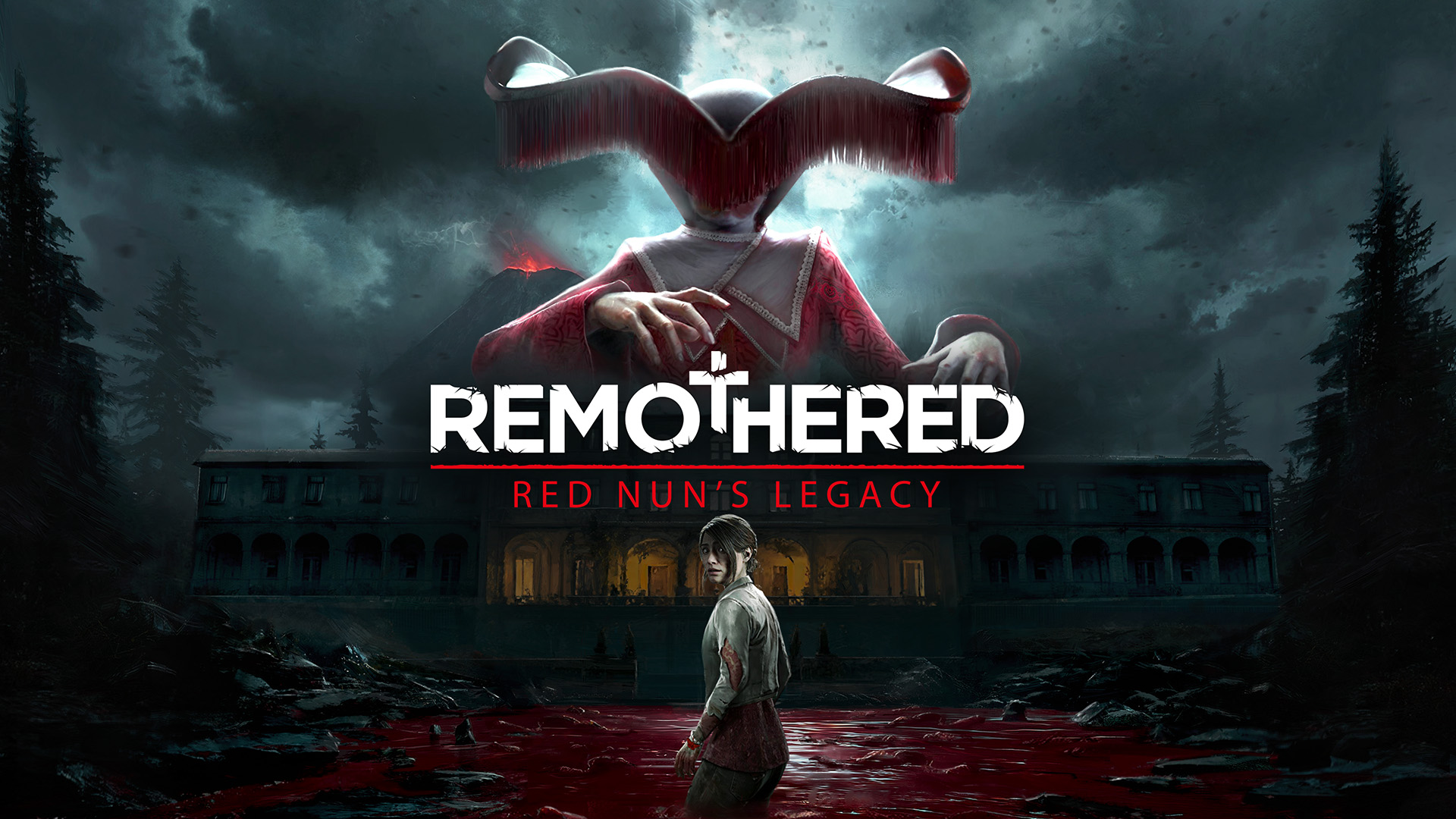
    Remothered: Red Nun’s Legacy artwork with a woman before a mansion and a large red-clad figure above.
    Promotional artwork for Remothered: Red Nun’s Legacy. Image supplied by Stormind Games. Image source.

    These mechanics accompany Susan’s search for her missing daughter. A recording gives her reason to believe the girl may still be alive and draws her to a former Ashmann family residence on Mount Etna’s slopes.
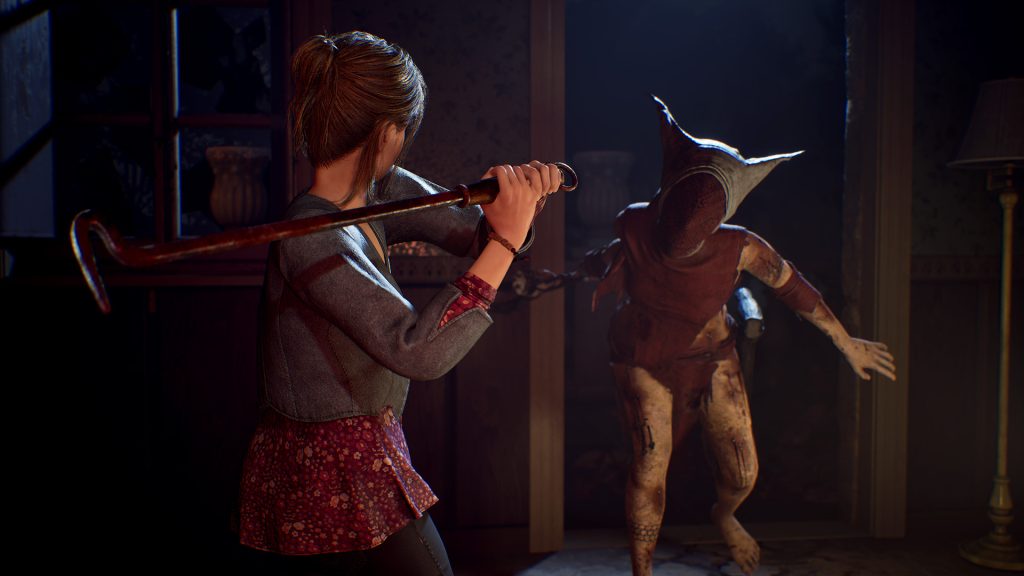
    A woman raises a metal bar as a masked figure approaches through a doorway.
    An encounter inside Remothered: Red Nun’s Legacy. Screenshot supplied by Stormind Games. Image source.

    The house contains clues, objects, and puzzles, as well as pursuing enemies. Susan can hide or evade them and fight back at critical moments. Exploration therefore involves both reading the setting and judging when she can move through it.

    A red-clad figure with a white head covering and broad red-fringed headdress in a firelit room.
    The Red Nun’s wide, fringed headdress obscures her eyes. Screenshot supplied by Stormind Games. Image source.

    Stormind Games connects the story to the Sicilian convent called Cristo Morente and the origins of the Red Nun. Cissy Jones voices Susan, while Maggie Robertson voices the Red Nun. The soundtrack is credited to Akira Yamaoka and Aram Shahbazians. The Steam edition lists an October 27, 2026 release. Stormind Games’ official story and mechanics description.
  • QUIET makes the players’ real voices part of the danger

    QUIET makes the players’ real voices part of the danger

    Alien ducks need to coordinate a repair mission while noise can reveal where they are.

    Talking to teammates has a consequence inside QUIET. The game requires a microphone because real-world sound forms part of its noise system, alongside movement and collisions in the environment. LINE Games’ official QUIET description.

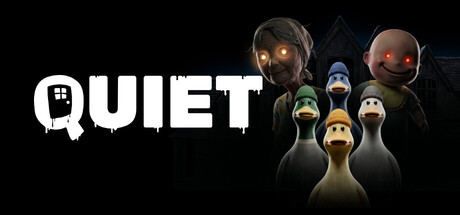
    Four cartoon ducks beneath two larger characters beside the QUIET logo.
    QUIET promotional key art supplied with LINE Games’ press release. © LINE Games Corporation. Image source.

    Its stranded travelers are alien ducks whose spacecraft has crashed on Earth. One to four players search for the components needed to repair it. Carrying objects and moving through unfamiliar places can create the very noise that attracts unwanted attention.

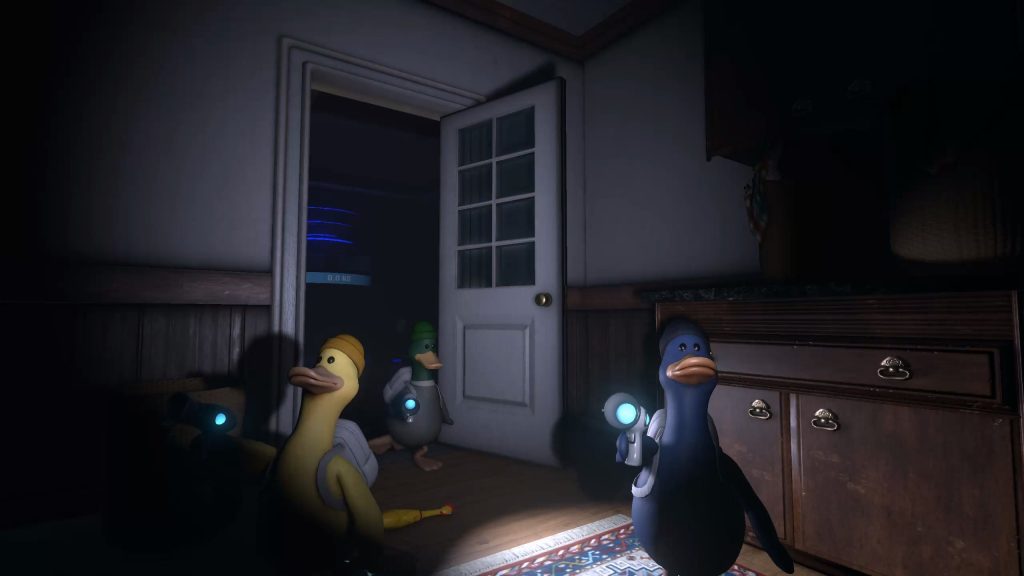
    Three cartoon ducks with illuminated equipment stand beside a dresser and an open door.
    QUIET’s duck characters explore a furnished interior. Screenshot supplied by LINE Games. Image source.

    Cooperation introduces a practical tension: the group needs to communicate, while speaking itself carries risk. The microphone links the room where someone is playing to the fictional space where the ducks are hiding. Silence becomes a shared task rather than simply a button that makes a character crouch.

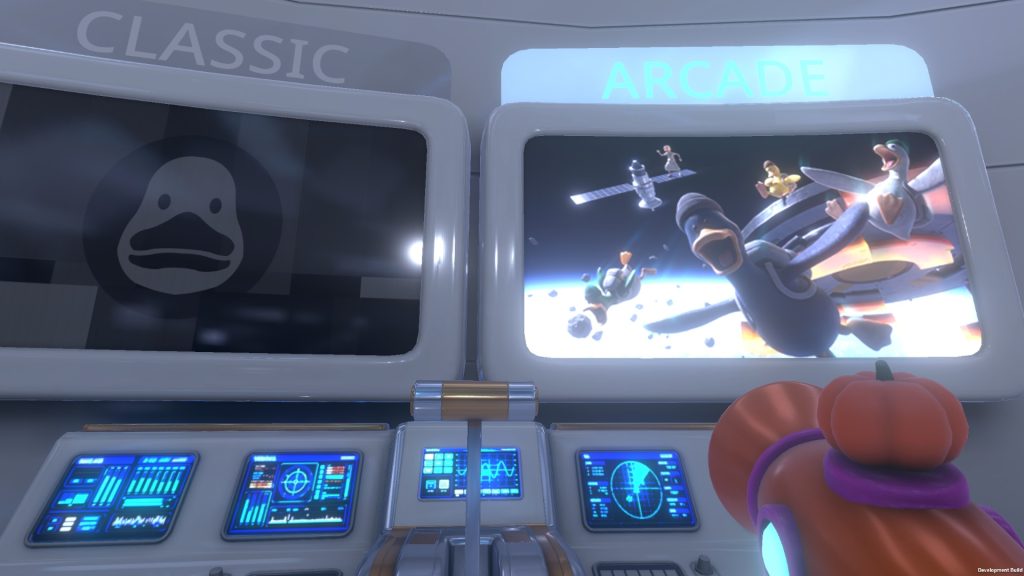
    A control console has screens labeled Classic and Arcade, with duck artwork on the Arcade screen.
    A development-build screenshot shows QUIET’s Classic and Arcade selection screens. Image supplied by LINE Games. Image source.

    LINE Games also describes an arcade mode built around competition between the ducks. That separate mode changes the relationship between players, who can knock each other down and interfere with one another’s chances. The co-op premise, by contrast, puts the repair effort and the consequences of noise on the whole crew. LINE Games’ official QUIET description.

  • Look Outside turns an apartment into a refuge between trips through the building

    Food, equipment, allies, and a television deadline connect the home to the dangers beyond its door.

    The apartment in Look Outside is somewhere to return to. Francis Coulombe’s survival horror roleplaying game sends its protagonist through one apartment building in search of supplies, then brings those resources back into a domestic routine. Devolver Digital’s official description of Look Outside.

    At home, the character can cook, make tools, play games, and spend time with allies. These activities sit between journeys into corridors occupied by transformed neighbors and other unfamiliar figures. Food and equipment connect the two halves of the game: the expedition supplies the home, and the home supports the next expedition.

    A television broadcast supplies a deadline. It says the outside will become safe in fifteen days. Looking out before then has a different consequence in the game’s premise: the observer changes into something else.

    The building therefore contains a longer wait. Exploration can produce information as well as materials, and the publisher describes multiple possible endings. The immediate task is to remain alive within that enclosed setting while gradually discovering what has happened beyond it. Devolver Digital’s official description of Look Outside.

  • Crystal Lake places Pam Voorhees at the center of the town’s unanswered questions

    Crystal Lake places Pam Voorhees at the center of the town’s unanswered questions

    The prequel begins almost a year after Jason’s drowning, when two strangers ask about his mother’s past.

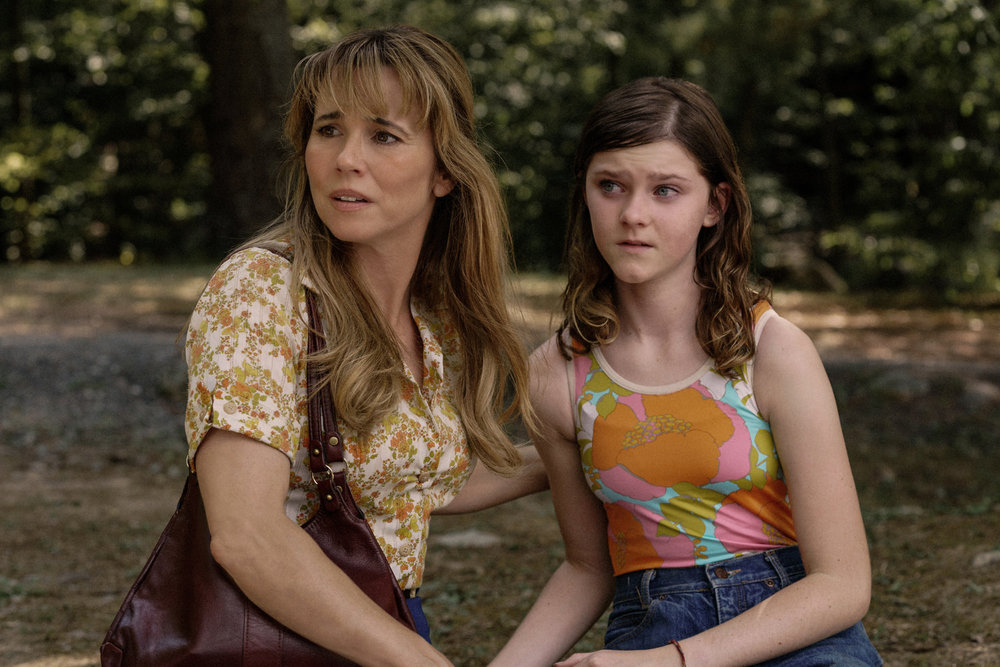
    Pam Voorhees is the person the town needs to understand in Crystal Lake. The Friday the 13th prequel follows her almost a year after her son Jason’s drowning, with Linda Cardellini playing Pam. NBCUniversal’s official Crystal Lake premise and credits.

    Pam Voorhees and Grace sitting together outdoors in a wooded setting.
    Linda Cardellini as Pam Voorhees and Gwendolyn Sundstrom as Grace in Crystal Lake. Photograph by Matt Infante/PEACOCK. Image source.

    The event that unsettles this period is an arrival at her door. Two strangers want information about her past. NBCUniversal’s premise makes their questions the beginning of a chain of events affecting the wider town, linking a family history to the community around the lake.

    Brad Caleb Kane created and wrote the eight-episode series. Its directing credits divide the season into three stretches: Michael Lennox directs episodes one through three, Celine Held and Logan George direct four through six, and Quyen Tran directs the final two.

    The cast also includes William Catlett, Devin Kessler, Cameron Scoggins, and Gwendolyn Sundstrom. Peacock released all eight episodes on October 15, 2026. The official setup approaches the franchise through Pam’s life and the people asking what preceded the events they can see. NBCUniversal’s official Crystal Lake premise and credits.

  • World of Horror builds its cosmic mysteries from artwork drawn in MS Paint

    Its one-bit presentation gives the investigations in Shiokawa a shared visual language.

    The hospitals, classrooms, apartments, and forests of World of Horror share an unusual production tool: MS Paint. The developer identifies that program as the source of all the game’s one-bit artwork. World of Horror’s official description and credits.

    The setting is Shiokawa, a Japanese town facing the return of the Old Gods. Its everyday places become sites of investigation, with strange events connecting local mysteries to a wider approaching catastrophe.

    The player chooses a character and works through cases assembled with randomized encounters. The current official description lists fourteen playable characters and a pool of twenty investigations, with multiple endings for most mysteries. Choices and turn-based combat determine how a particular attempt unfolds.

    Developer panstasz pairs the pixel artwork with a chiptune soundtrack. The publisher names Junji Ito and H. P. Lovecraft as influences on its horror imagery. Those references describe the creative lineage supplied by the developer; the game’s town, characters, and changing investigations provide its own framework for the images. World of Horror’s official description and credits.

  • God Save Birmingham makes the town’s furniture part of surviving its undead inhabitants

    Movable objects and the player’s own physical vulnerability operate within the same simulation.

    A table can change the route through a room in God Save Birmingham. Furniture can be moved against doors, while barrels can become moving obstacles for the undead. The objects around the survivor have a physical role beyond furnishing the town. Ocean Drive Studio’s official game description.

    Ocean Drive Studio sets its survival simulation in an imagined outbreak within medieval Birmingham. Its version of the market town includes the Bull Ring and Saint Martin’s Church, now surrounded by former inhabitants who have become a threat.

    The same physical system also makes the player vulnerable. A stumble can cost the character a weapon; a fall can cause an injury. Manipulating an object and navigating the space around it belong to the same set of decisions.

    Food and other daily needs remain part of surviving the outbreak. The official page describes a game still in development, with its public release date unconfirmed. Its stated approach places those needs inside a town whose ordinary contents can be rearranged, obstructed, or used during an encounter. Ocean Drive Studio’s official game description.

  • Hellraiser’s planned tabletop games turn the puzzle box into several kinds of play

    Hellraiser’s planned tabletop games turn the puzzle box into several kinds of play

    The planned range spans an escape-room format, dice, social deduction, a board game, and a roleplaying game.

    Hellraiser’s Lament Configuration is a physical object that opens a route into another world. Salt Entertainment’s tabletop adaptation uses that premise in an escape-room-style game, one part of a larger licensed range rather than a single box. Salt Entertainment’s official project details.

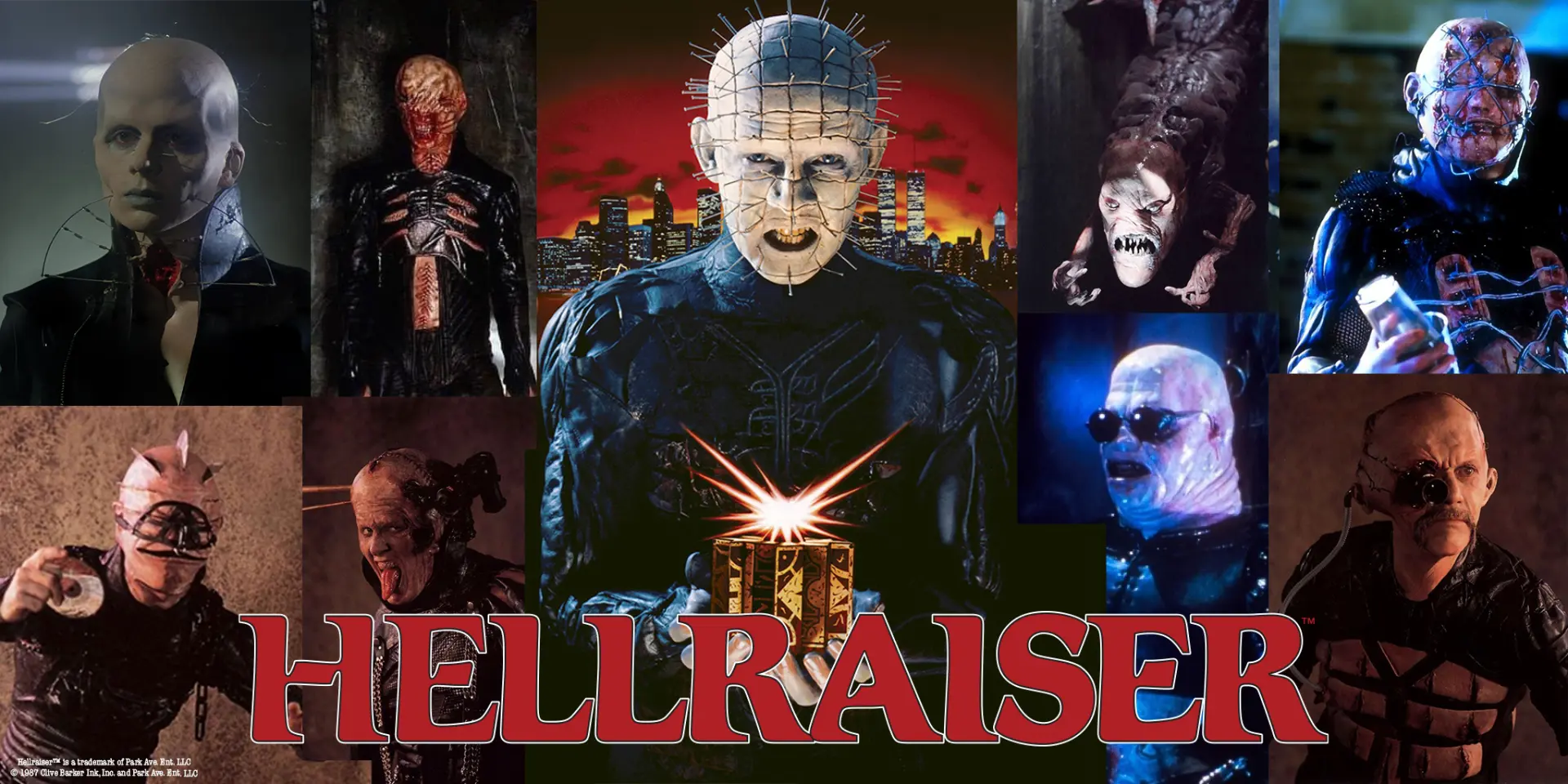
    A collage of Hellraiser characters around Pinhead and the puzzle box, above the Hellraiser title.
    Hellraiser franchise artwork supplied with Salt Entertainment’s tabletop press release. © 1987 Clive Barker Ink, Inc. and Park Ave. Ent. LLC. This image depicts film characters; final game artwork is still to be revealed. Image source.

    The other initial retail concepts take different forms. A dice game centers on risk and temptation, while a social deduction game uses concealed desires and changing loyalties. Those formats give the property separate sets of player decisions: solving, taking chances, and assessing what other people are hiding.

    Two additional projects have named designers. Michael Shinall is attached to a Hellraiser board game. Francesco Nepitello is designing a tabletop roleplaying game, which will provide a framework for players to create stories within the property’s world.

    Salt’s agreement is with Clive Barker and Park Ave Ent. LLC, with Surge Licensing acting as broker. The first releases are planned to begin around Halloween 2027, the original film’s fortieth-anniversary year.

    These are descriptions of the planned formats. Salt has not supplied final titles, full rules, or individual release dates in the project notice. The announced range establishes several approaches to the material without yet showing exactly how each will play. Salt Entertainment’s official project details.

  • Savage Lake brings a mother back to her family cabin to repair it and leave

    Nick Medina’s novel begins with a practical plan to repair and sell a family property.

    Nell Marin wants to dispose of a place, not revisit it. Her estranged father’s death brings her and her teenage son, Oscar, to the family cabin on Torchlight Lake, where they intend to make repairs and arrange a sale. Berkley’s official description of Savage Lake.

    In Nick Medina’s Savage Lake, that limited errand stretches into a much longer stay. According to the publisher’s synopsis, roads crossing Native land are barricaded by the local Tribe. The family’s intended route away from the cabin is no longer available.

    During the extended visit, Oscar hears screams over the water and encounters signs that someone is watching from the trees. He also notices changes in his mother. The questions he needs to answer concern both what is happening around the cabin and what Nell has withheld about her earlier life there.

    The setting is therefore an inherited property with a history divided between generations. Nell remembers what happened; Oscar arrives without the same knowledge. The plot brings that difference into the present as he tries to understand the circumstances that once harmed her.

    Berkley published Savage Lake on October 27, 2026. The publisher lists hardcover, ebook, and audiobook editions; the print and digital text editions run 336 pages. Berkley’s official description of Savage Lake.

  • Connected turns a roadside-assistance call into a search for a killer

    Jason Jenkins’s novel confines its central connection to the voice of a caller and the worker listening to him.

    Katharine Keyes usually helps drivers with problems such as flat tires and dead batteries. In Jason Jenkins’s Connected, a caller named Danny introduces a different emergency: he has killed someone, and he is still driving. Encyclopocalypse’s official synopsis.

    The publisher’s premise puts Kate at the other end of a roadside-assistance connection. Danny’s location is unavailable through the vehicle’s tracking systems. She must work from what she can hear, including the details he discloses and the sounds accompanying the call.

    That arrangement makes the conversation the route through the story. Danny claims his victims deserve what happens to them, while Kate tries to assemble enough information to stop further killings. His explanation is the fictional caller’s justification, not an established account of his victims.

    Connected follows that encounter over a single night. It links the work of listening to an unfolding pursuit, with Kate physically separated from the person whose next movements she needs to understand.

    Encyclopocalypse identifies Connected as Jenkins’s debut novel and lists it among its available releases. The publisher offers paperback and ebook formats. Publisher’s current release listing.

  • In Ten Candles, the remaining light measures how much story is left

    In Ten Candles, the remaining light measures how much story is left

    The tabletop game makes a shrinking circle of candlelight part of its rules and its predetermined ending.

    The characters in Ten Candles do not have an escape route written into the game’s ending. Cavalry Games describes a form of tragic horror in which all the characters die during the final scene. The players begin knowing that destination. Cavalry Games’ official explanation of Ten Candles.

    Ten tea lights provide both illumination and a countdown. As the session progresses toward its last candle, the remaining light marks the approach of the ending. The physical setup makes time visible at the table rather than leaving it entirely to a narrated deadline.

    The story concerns what the characters do before that ending. Its people, setting, and monsters can change between sessions, with a gamemaster selecting a scenario for the group. A predetermined outcome does not determine every event that leads there.

    Cavalry Games describes the format as a single session lasting roughly two to four hours, with one gamemaster and three to five players. It is built around collaborative storytelling rather than an ongoing campaign.

    The candles are consequently more than decoration. They belong to the game’s structure: a limited source of light surrounding people who, within the fiction, have a limited amount of time.

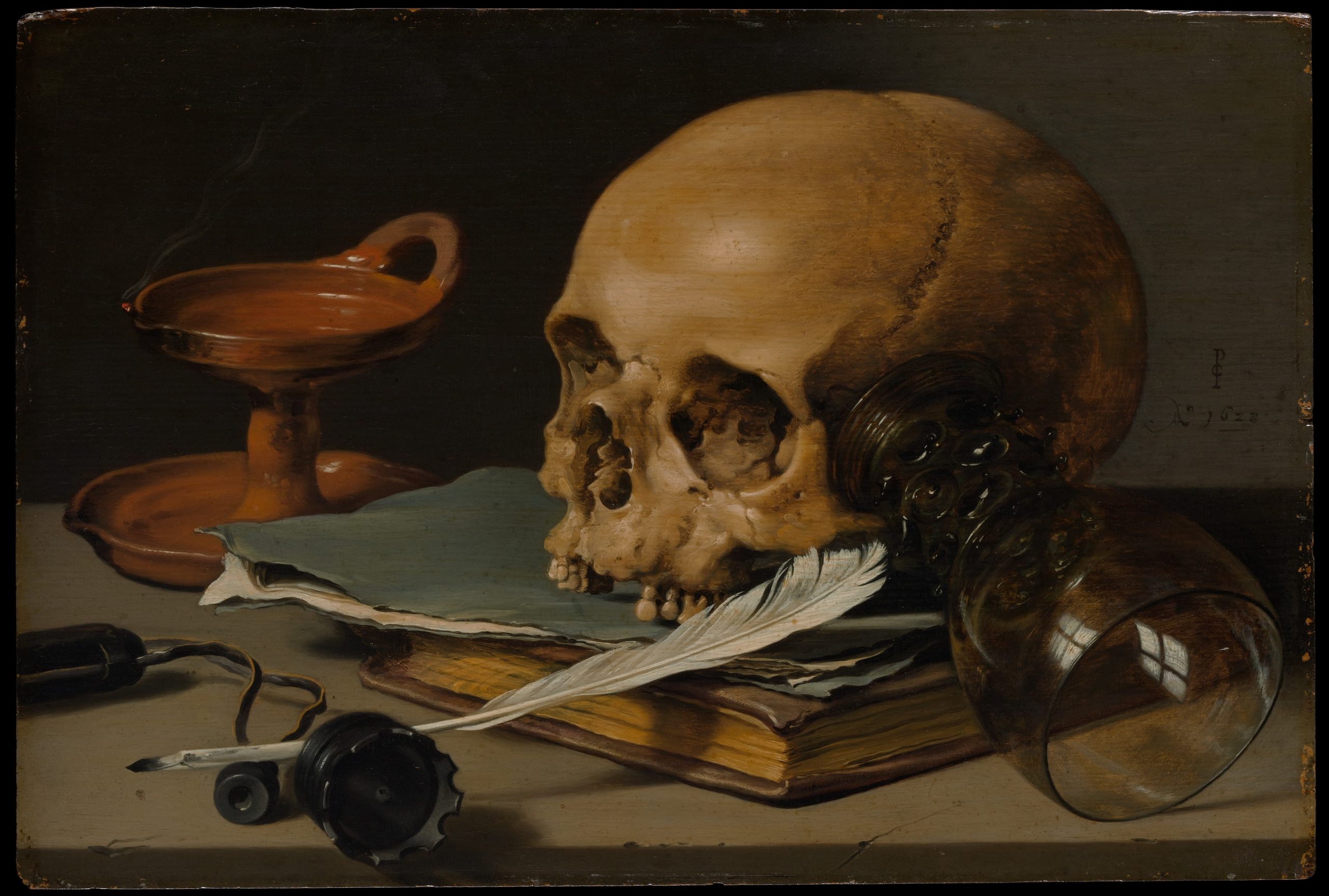
    A much older image gives that diminishing light a historical counterpart. In Pieter Claesz’s Still Life with a Skull and a Writing Quill, painted in 1628, an oil lamp’s wick fades beside a skull and an overturned glass. The Metropolitan Museum of Art identifies these objects as reminders that life is brief. The painting makes mortality visible through objects; Ten Candles makes the loss of light an event shared by the people at the table. The Metropolitan Museum of Art’s collection record.

    A skull, overturned drinking glass, quill, books, and a smoking oil lamp in a brown and gray still life.
    Pieter Claesz, Still Life with a Skull and a Writing Quill, 1628, oil on wood. The Metropolitan Museum of Art, Rogers Fund, 1949. Public domain. Historical artwork illustrating mortality and fading light. Image source.