The tabletop game makes a shrinking circle of candlelight part of its rules and its predetermined ending.
The characters in Ten Candles do not have an escape route written into the game’s ending. Cavalry Games describes a form of tragic horror in which all the characters die during the final scene. The players begin knowing that destination. Cavalry Games’ official explanation of Ten Candles.
Ten tea lights provide both illumination and a countdown. As the session progresses toward its last candle, the remaining light marks the approach of the ending. The physical setup makes time visible at the table rather than leaving it entirely to a narrated deadline.
The story concerns what the characters do before that ending. Its people, setting, and monsters can change between sessions, with a gamemaster selecting a scenario for the group. A predetermined outcome does not determine every event that leads there.
Cavalry Games describes the format as a single session lasting roughly two to four hours, with one gamemaster and three to five players. It is built around collaborative storytelling rather than an ongoing campaign.
The candles are consequently more than decoration. They belong to the game’s structure: a limited source of light surrounding people who, within the fiction, have a limited amount of time.
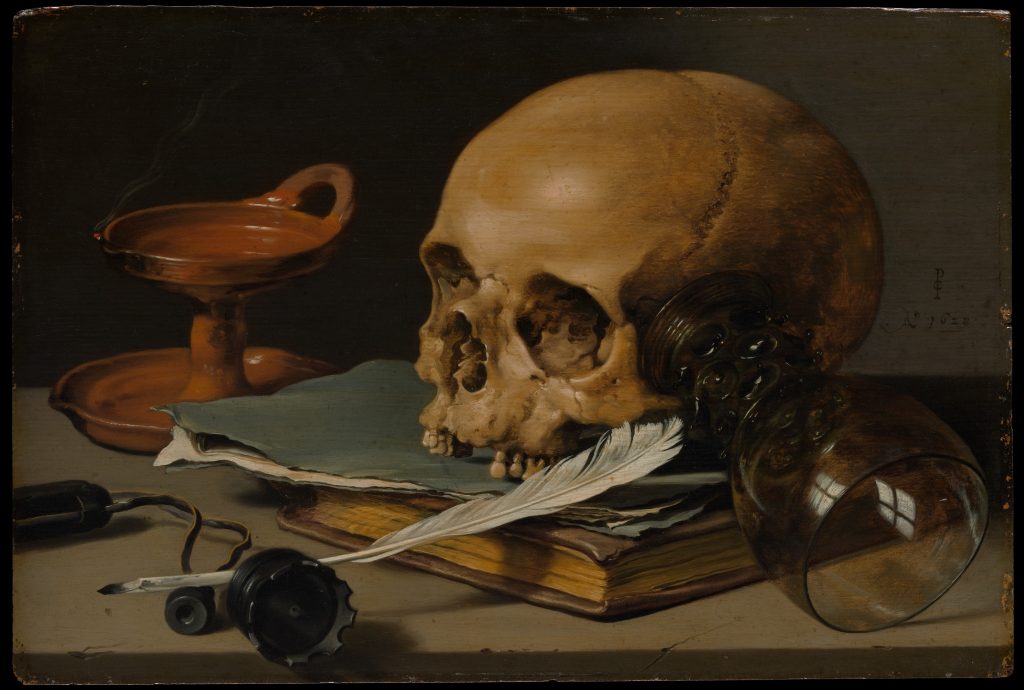
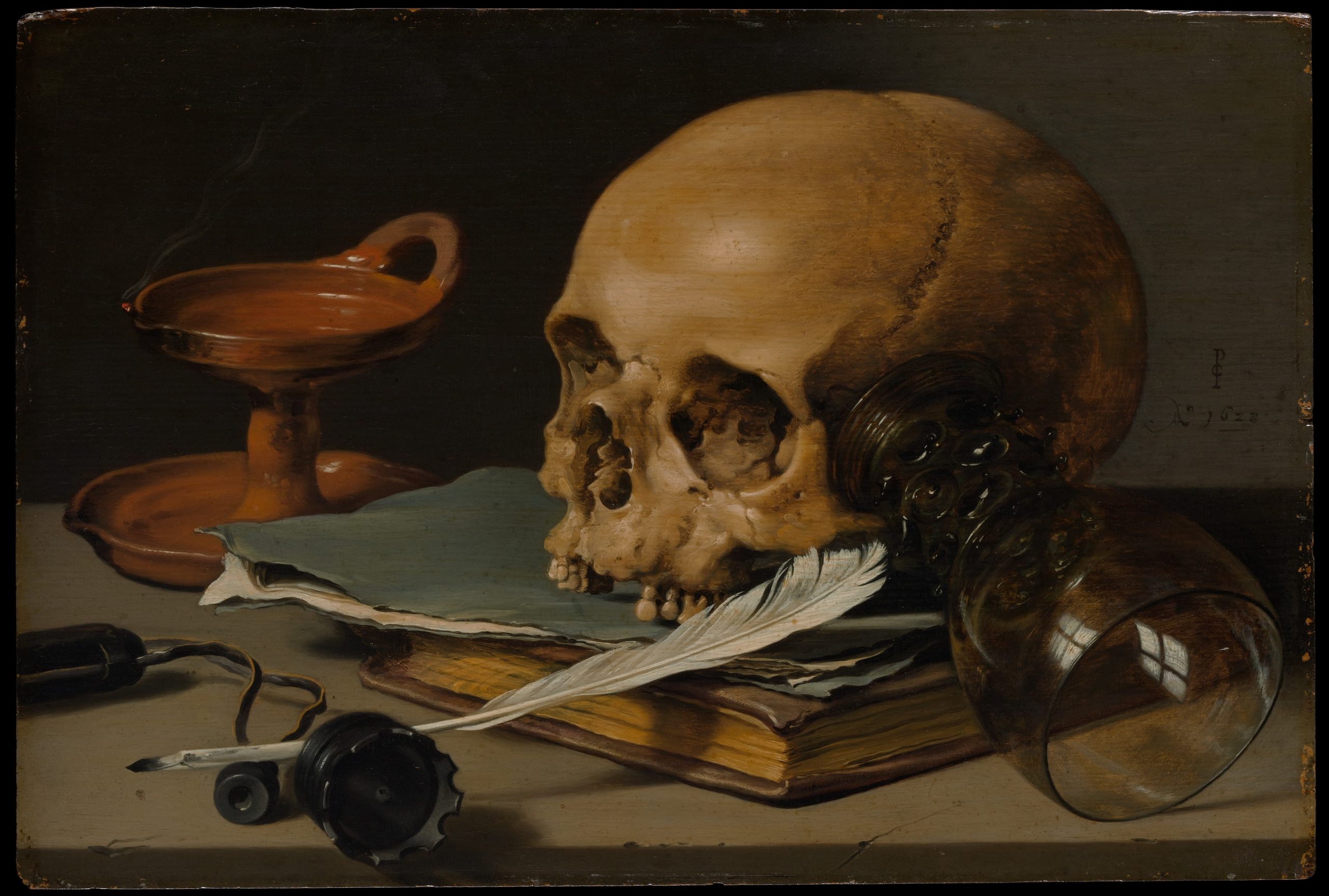
A much older image gives that diminishing light a historical counterpart. In Pieter Claesz’s Still Life with a Skull and a Writing Quill, painted in 1628, an oil lamp’s wick fades beside a skull and an overturned glass. The Metropolitan Museum of Art identifies these objects as reminders that life is brief. The painting makes mortality visible through objects; Ten Candles makes the loss of light an event shared by the people at the table. The Metropolitan Museum of Art’s collection record.