Before the telling
It began in
Underbough
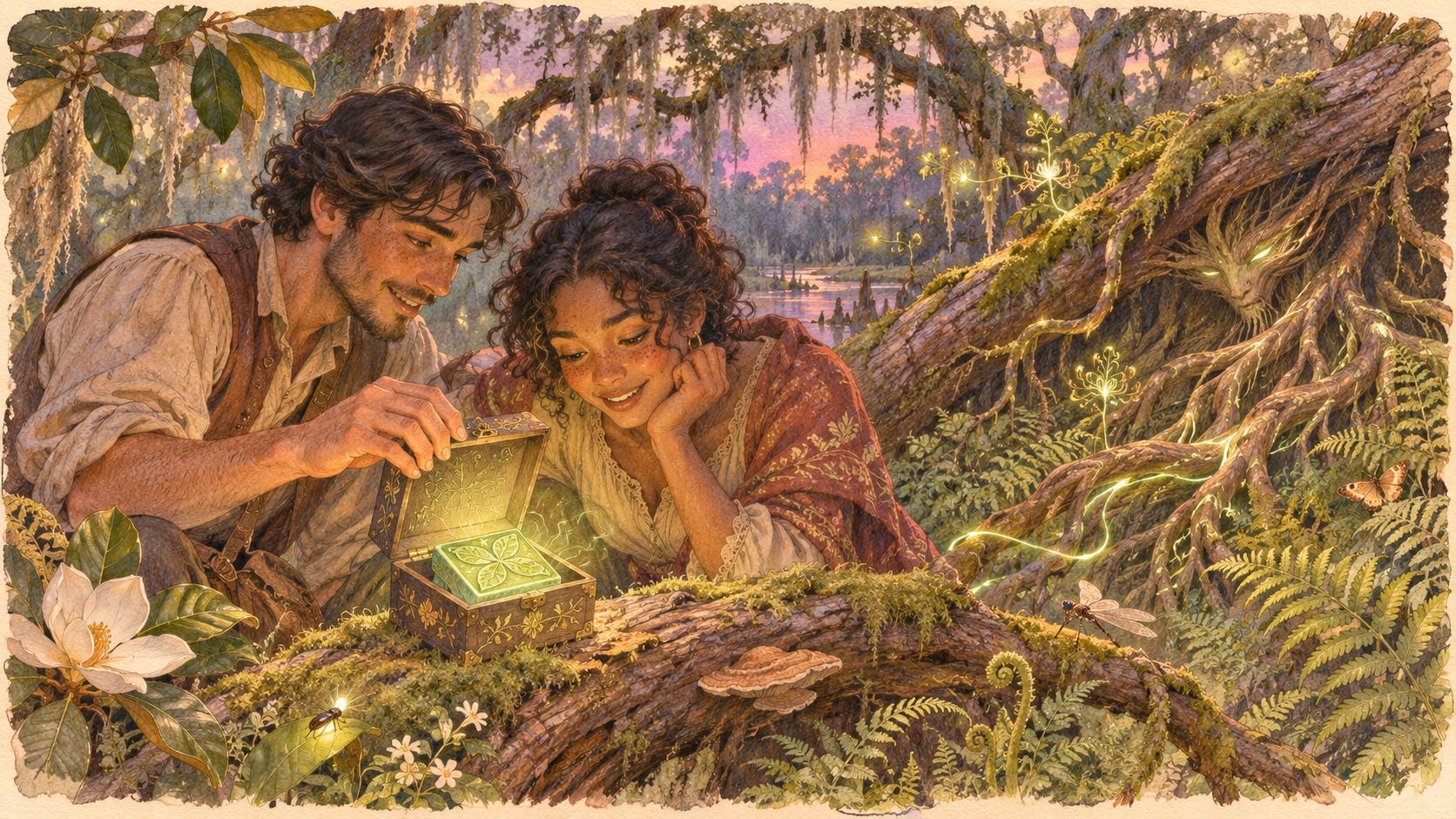
Maret Fen took over her father’s lamp cart the winter the lamp-oil road washed out. Her cousin Quill, a forest mystic, maps fallen trunks with Nima Doss, steward of the Root Coven. Before the washout, Maret had paid her cousin to clear deadwood so the cart could turn around.
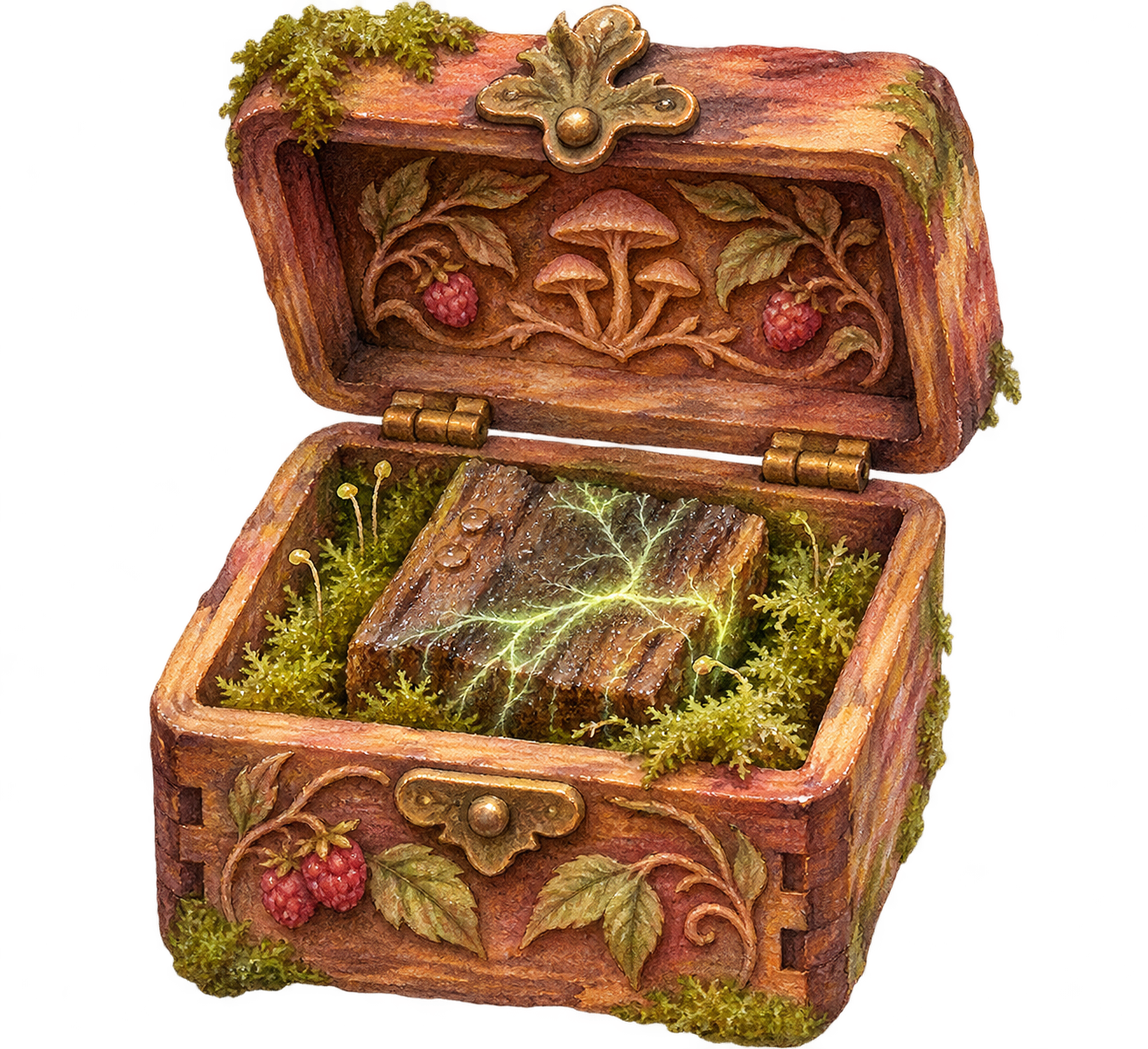
The root coven left the lid open.
Kinship, stewardship, and a loan
The people around
the little box
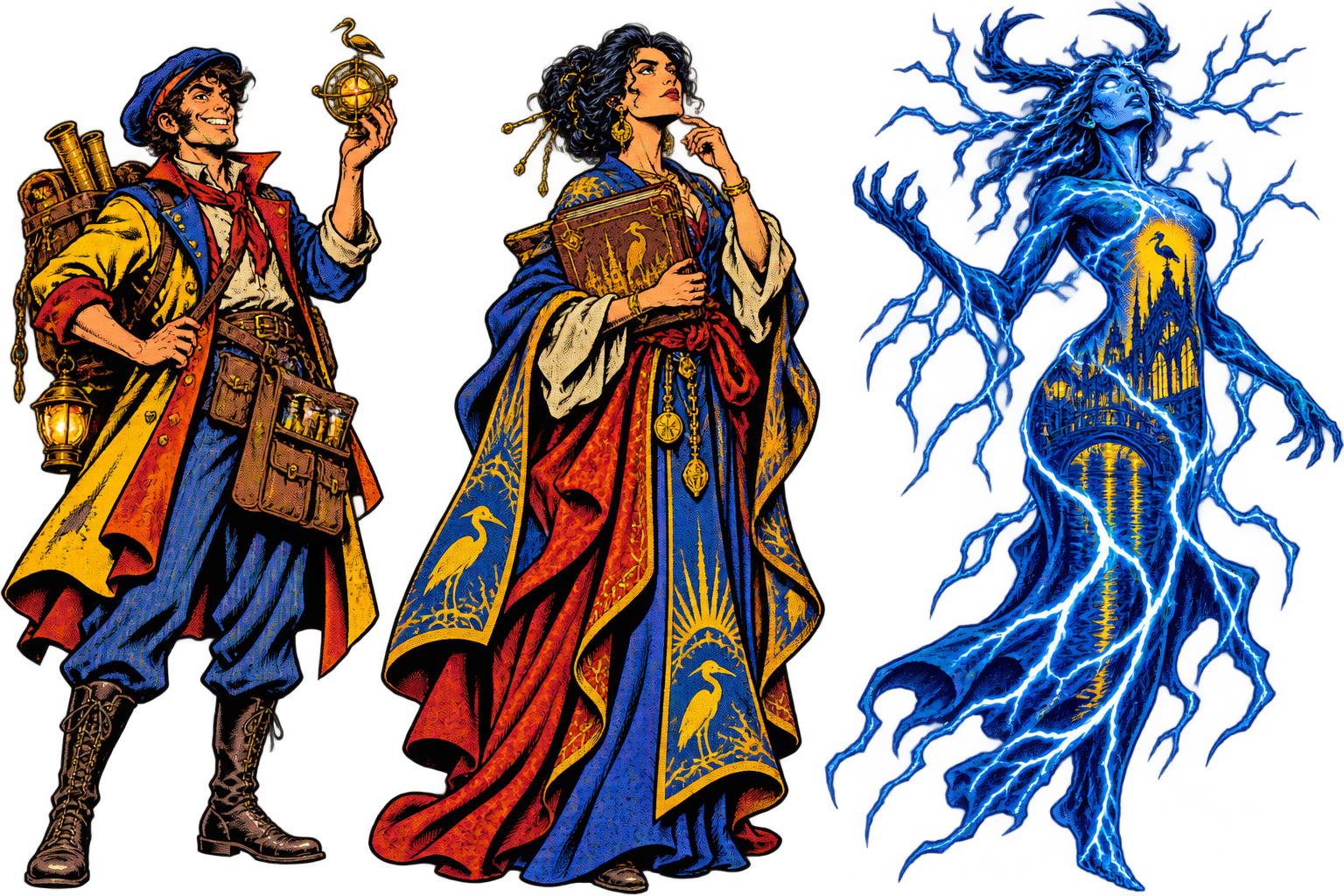
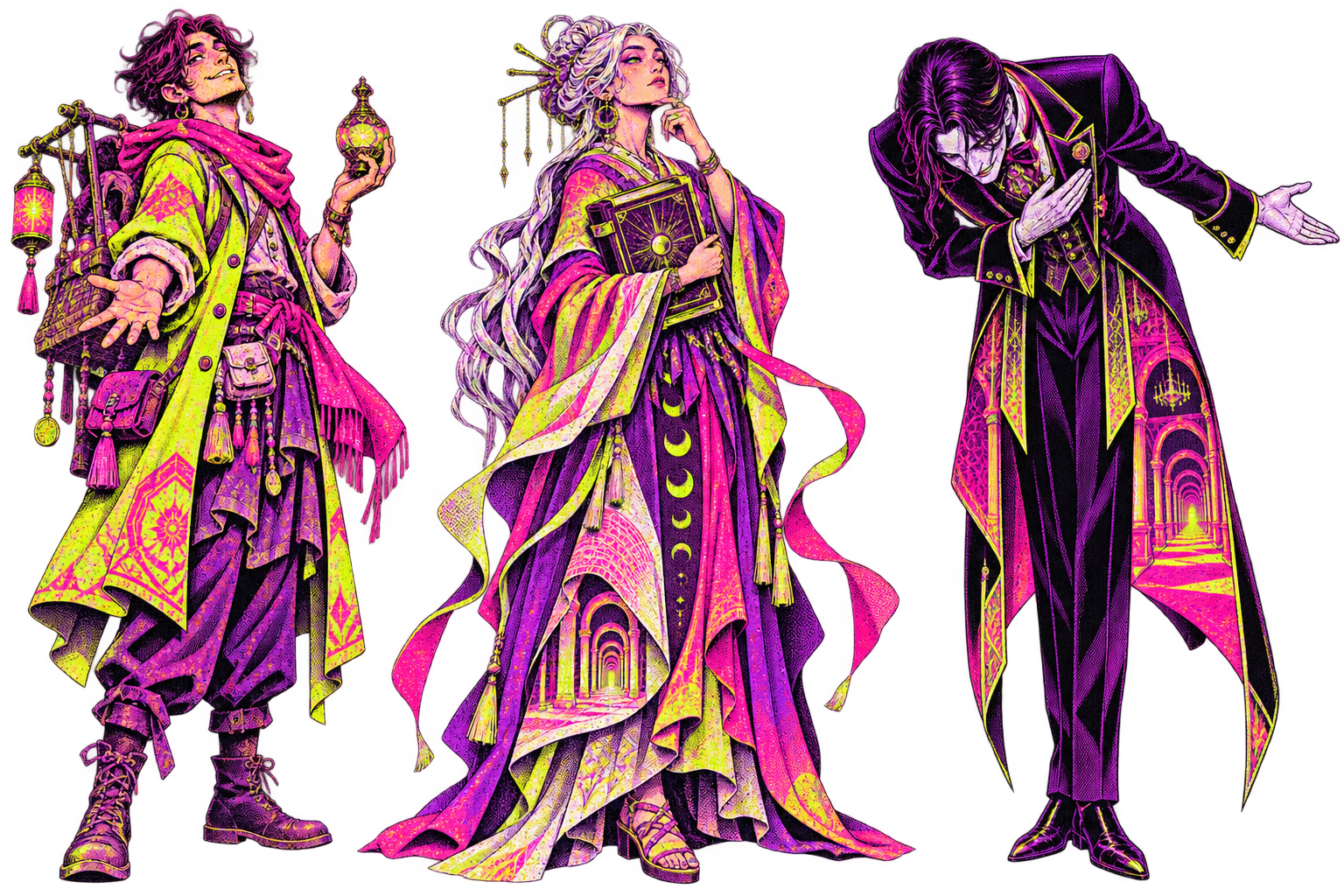
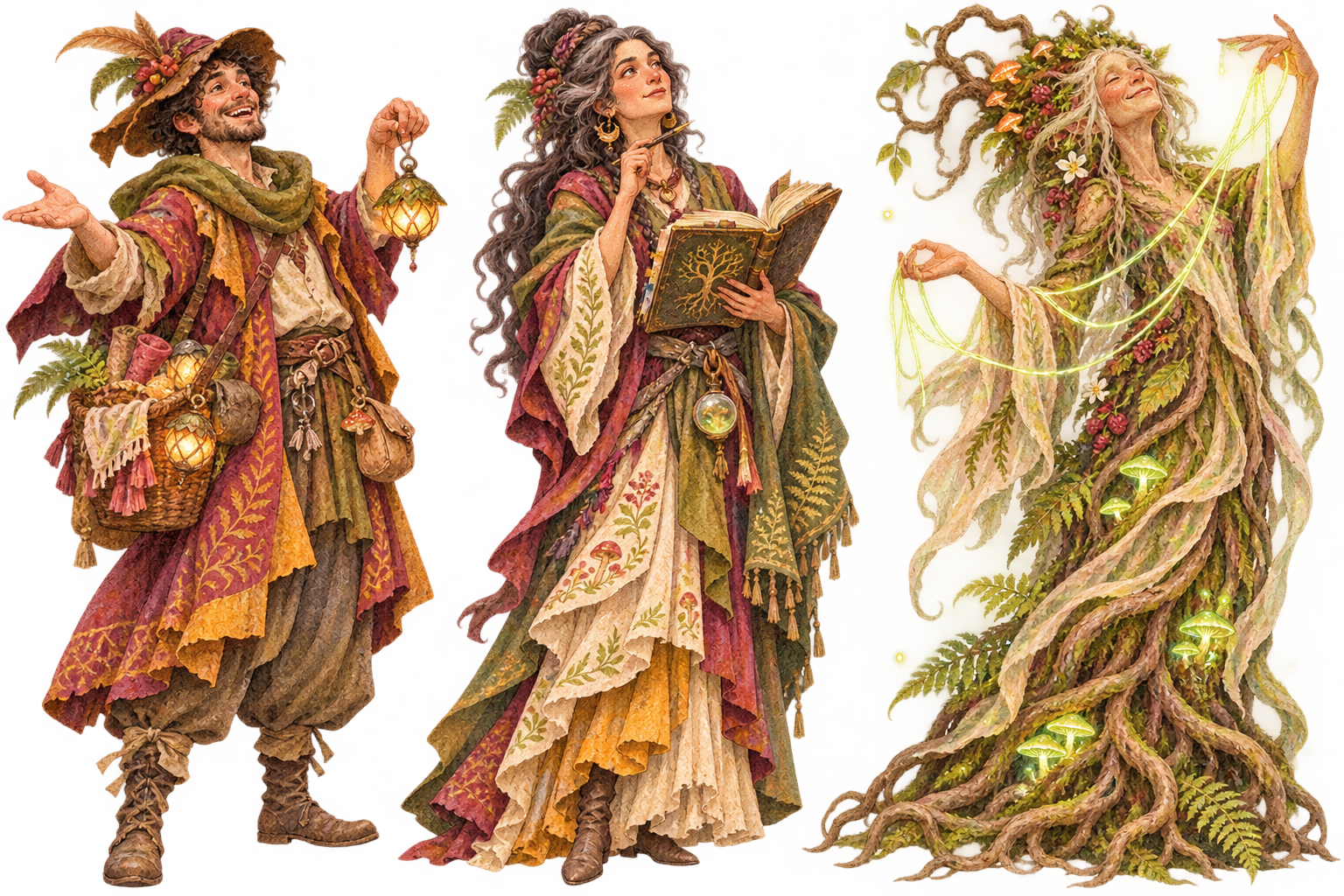
Maret & Quill
Two cousins with different work: she needs the lamp trade to survive; he knows what lives in the fallen trees they once cleared.
Nima Doss
The Root Coven’s steward keeps an intact sample, giving the cousins a living comparison.
Lume Underroot
The patient lender waits while Maret learns the difference between owning a box and keeping its contents alive.
The story they still tell
The Coven That Borrowed Green
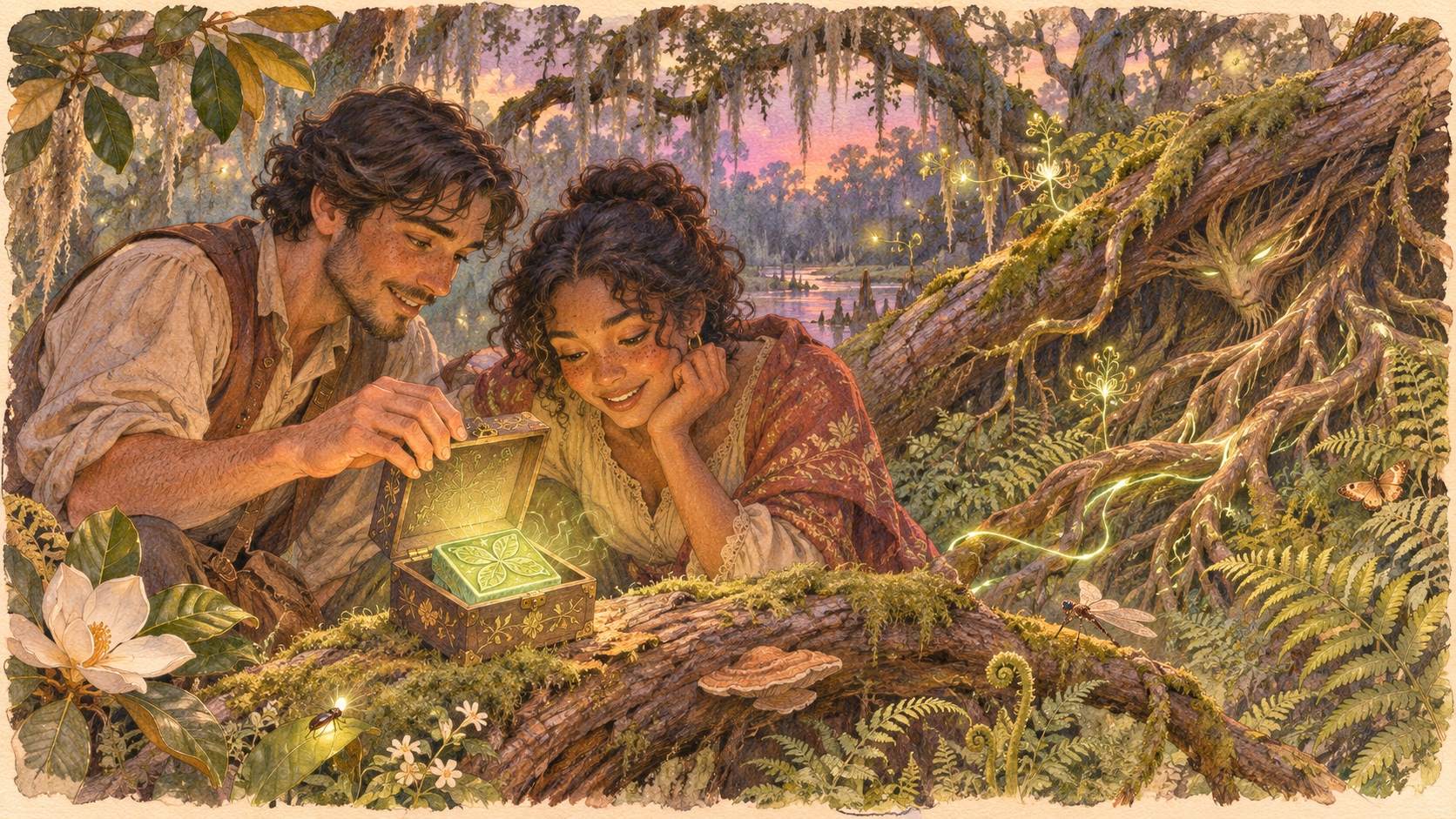
When the oil ran out, the root demon Lume Underroot offered Maret a box with a square of wet wood in it. The grain gave off a green light, just bright enough to show a familiar face if you held it close. Maret laid the box on her counter. People came to see it. By the end of the week she was renting little boxes of green to half the village, although she remembered quite clearly that Lume had only ever lent her one.
In the dry houses the green went out. Maret went back to the ravine for more and found the fallen tree scraped white where she had cut it. Quill showed her a second trunk still shining under its bark. Nima set the original box down beside it, with the lid open. Maret had to refund nearly everything she’d made. The next autumn people came to the ravine after dusk, paid for her hot cider, and waited for their eyes to adjust. Lume never came to collect the box. A pale thread had grown across the hinge.
On the first cider night, nobody saw anything for a long time. Maret kept her ladle still. A visitor finally noticed green at the rim of the box, and the line of people went quiet all at once.
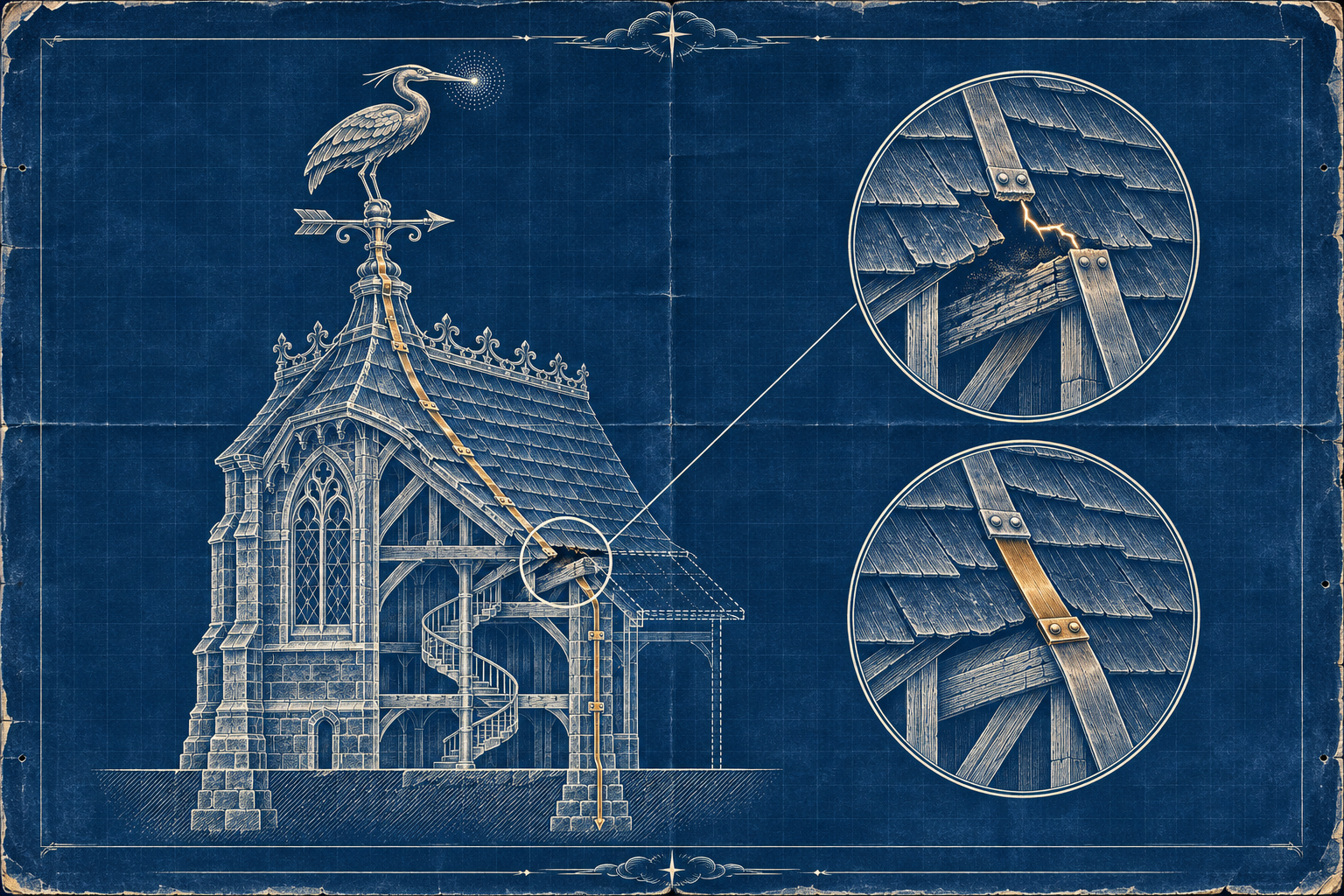
Nima’s comparison / two pieces of wood
The box went dark.
The log did not.
Dimmed in the dry room
Maret’s cut piece loses its light indoors. The box holds the wood; it cannot keep its living conditions.
Still glowing in the ravine
Nima’s surviving log remains damp. The faint green comes from fungi within the decaying wood.
What does the comparison reveal?
The tale’s clue is the difference between the two specimens. The green light belongs to a living process, not a stored charge. This is foxfire: light produced by certain wood-decaying fungi.
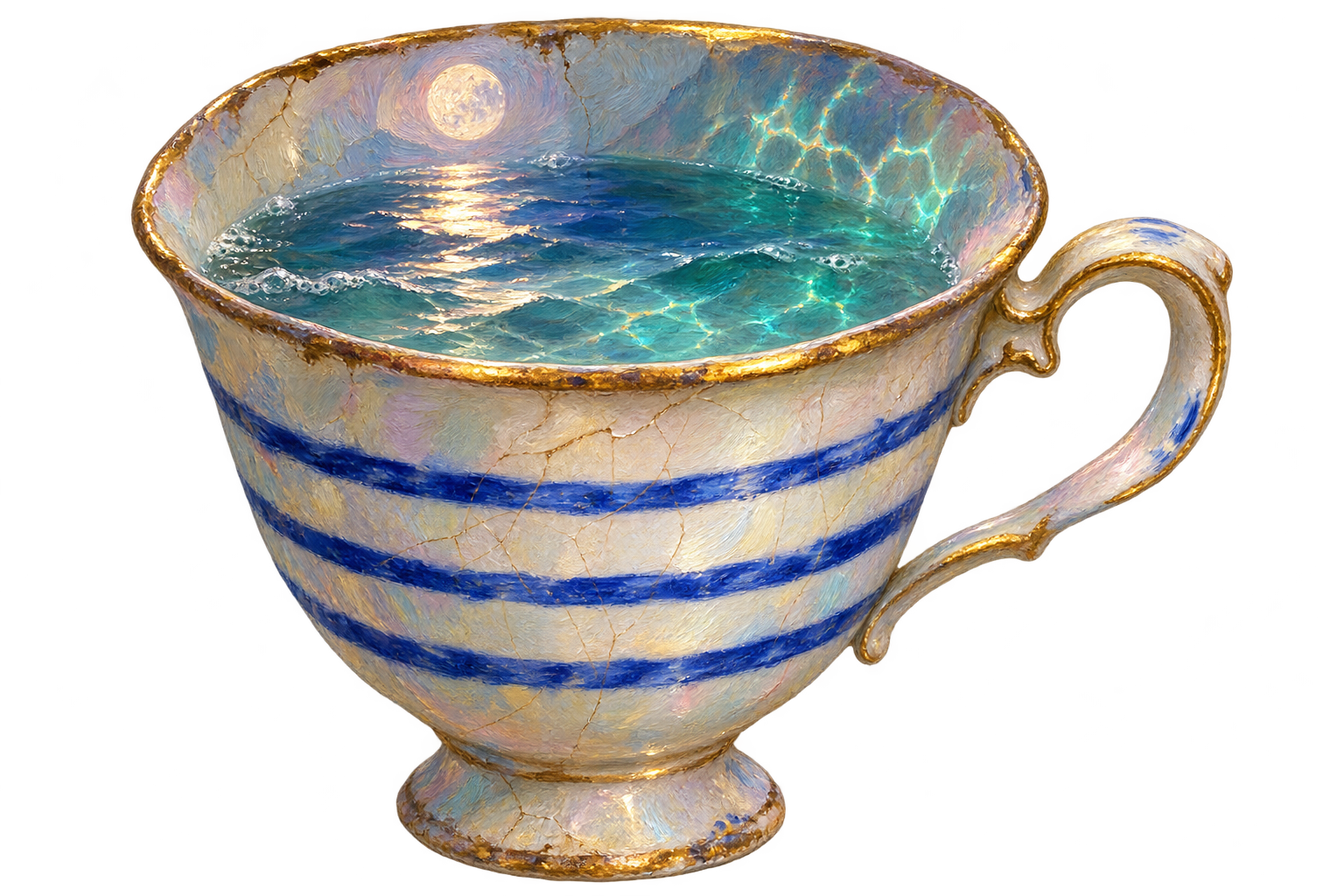
Field reference: Missouri Department of Conservation on foxfire ↗Illustrated specimens from the tale · tap either image for a closer look.
A thread through the tale
How the story turns
- 01Origin: The washout makes ordinary lamp oil scarce and threatens Maret’s trade.
- 02Inciting gift: Maret borrows a glowing tile and discovers she can charge people to take similar pieces home.
- 03Escalation: The cut tiles dim indoors, so she harvests more from the same log and damages the patch she relies on.
- 04Climax: Quill’s comparison and Nima’s intact sample convince Maret to stop cutting and refund her renters.
- 05Aftermath: Maret earns a living at the forest edge; the coven keeps records of which trunks glow after wet weather.

Inside the coven’s ledger
What the world
was really doing
A wood-decaying fungus in Vell produces bioluminescence in its threadlike mycelium. Its light comes from a chemical reaction in living tissue. Pieces carried indoors sometimes kept glowing briefly; as they dried, the fungus grew less active. The coven’s paired tiles, kept under dry and damp conditions, showed why a household lamp was a poor use for a creature of the ravine.
Advanced Science: Bioluminescent wood